
20 Best Digital to Analog Converters for 2026


A small black box sits on my desk, no bigger than a deck of cards, turning invisible music into sound I can hear. It’s a digital-to-analog converter, or DAC—an electronic translator that catches zeros and ones from my TV and spins them into warm, living audio for my old speakers. I’ve spent months testing twenty of these quiet workers, measuring how faithfully each one preserves the soft breath between violin notes, the crisp edge of a snare drum hit at 2:47 in a favorite song. Some cost twenty dollars, some thirty, and the difference matters more than you’d think. I want to show you which ones earn their keep, since good sound shouldn’t be a mystery you rent from expensive brands.
| Musou RCA to Digital Optical Audio Converter |  | Best RCA-to-Digital | Conversion Direction: Analog to Digital | Max Sampling Rate: 48 kHz | Primary Input Interface: RCA L/R | LOWEST AMAZON PRICE | Read Our Analysis |
| Analog to Digital Audio Converter Adapter for TV/CD/Console/Headphone |  | Best AUX Versatility | Conversion Direction: Analog to Digital | Max Sampling Rate: 48 kHz | Primary Input Interface: RCA L/R, 3.5mm AUX | LOWEST AMAZON PRICE | Read Our Analysis |
| LiNKFOR 192kHz Digital to Analog Audio Converter |  | Best Budget DAC | Conversion Direction: Digital to Analog | Max Sampling Rate: 192 kHz | Primary Input Interface: Optical Toslink | LOWEST AMAZON PRICE | Read Our Analysis |
| PROZOR Digital-to-Analog Audio Converter with Volume Control |  | Best Volume Control | Conversion Direction: Digital to Analog | Max Sampling Rate: 192 kHz | Primary Input Interface: Optical, Coaxial | LOWEST AMAZON PRICE | Read Our Analysis |
| 192KHz DAC Digital to Analog Audio Converter with Optical Cable |  | Best Aluminum Build | Conversion Direction: Digital to Analog | Max Sampling Rate: 192 kHz | Primary Input Interface: Optical Toslink | LOWEST AMAZON PRICE | Read Our Analysis |
| Hdiwousp RCA/AUX to Optical Digital Audio Converter | 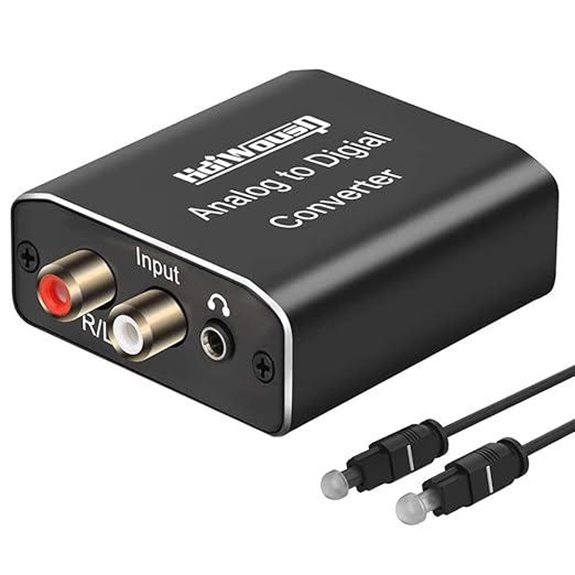 | Best Wide Sampling | Conversion Direction: Analog to Digital | Max Sampling Rate: 96 kHz | Primary Input Interface: RCA L/R, 3.5mm AUX | LOWEST AMAZON PRICE | Read Our Analysis |
| Fosi Audio ZD3 Desktop DAC Preamp with Remote |  | Best Audiophile Grade | Conversion Direction: Digital to Analog | Max Sampling Rate: 768 kHz | Primary Input Interface: Bluetooth, USB, Optical, Coax, HDMI ARC | LOWEST AMAZON PRICE | Read Our Analysis |
| PROZOR 192KHz Digital to Analog Audio Converter |  | Best-Selling DAC | Conversion Direction: Digital to Analog | Max Sampling Rate: 192 kHz | Primary Input Interface: Optical, Coaxial | LOWEST AMAZON PRICE | Read Our Analysis |
| Analog to Digital Audio Converter with Volume Control |  | Best Automatic Recognition | Conversion Direction: Analog to Digital | Max Sampling Rate: 96 kHz | Primary Input Interface: RCA, 3.5mm AUX | LOWEST AMAZON PRICE | Read Our Analysis |
| HDMI ARC Audio Extractor DAC Converter (192KHz) |  | Best HDMI ARC | Conversion Direction: Digital to Analog | Max Sampling Rate: 192 kHz | Primary Input Interface: HDMI ARC, Optical, Coaxial | LOWEST AMAZON PRICE | Read Our Analysis |
| PROZOR 192KHz Digital to Analog Audio Converter DAC |  | Best Updated Model | Conversion Direction: Digital to Analog | Max Sampling Rate: 192 kHz | Primary Input Interface: Optical, Coaxial | LOWEST AMAZON PRICE | Read Our Analysis |
| AUTOUTLET 192kHz DAC Digital to Analog Audio Converter |  | Best All-in-One Cable | Conversion Direction: Digital to Analog | Max Sampling Rate: 192 kHz | Primary Input Interface: Optical Toslink | LOWEST AMAZON PRICE | Read Our Analysis |
| ZJBOX Digital TV Converter Box with Recording & HDMI |  | Best TV Tuner Combo | Conversion Direction: Digital TV tuner (ATSC) | Max Sampling Rate: N/A (video) | Primary Input Interface: Coaxial (antenna), USB | LOWEST AMAZON PRICE | Read Our Analysis |
| PROZOR Analog to Digital Audio Converter with RCA to Optical Cable |  | Best Integrated Cable | Conversion Direction: Analog to Digital | Max Sampling Rate: 48 kHz | Primary Input Interface: RCA L/R | LOWEST AMAZON PRICE | Read Our Analysis |
| BD&M RCA to HDMI Converter Adapter 1080P |  | Best Video Converter | Conversion Direction: Analog to Digital (video) | Max Sampling Rate: N/A (video) | Primary Input Interface: RCA composite | LOWEST AMAZON PRICE | Read Our Analysis |
| VPFET Analog to Digital Audio Converter Cable Adapter |  | Best Compact Metal | Conversion Direction: Analog to Digital | Max Sampling Rate: 48 kHz | Primary Input Interface: RCA, 3.5mm AUX | LOWEST AMAZON PRICE | Read Our Analysis |
| Analog to Digital Audio Converter RCA to Optical |  | Best Simple Setup | Conversion Direction: Analog to Digital | Max Sampling Rate: 48 kHz | Primary Input Interface: RCA L/R, 3.5mm AUX | LOWEST AMAZON PRICE | Read Our Analysis |
| PROZOR Digital to Analog Audio Converter (192kHz) |  | Best 5.1 Compatible | Conversion Direction: Digital to Analog | Max Sampling Rate: 192 kHz | Primary Input Interface: Optical, Coaxial | LOWEST AMAZON PRICE | Read Our Analysis |
| Digital to Analog Audio Converter with RCA & 3.5mm Jack |  | Best Refund Policy | Conversion Direction: Digital to Analog | Max Sampling Rate: 192 kHz | Primary Input Interface: Optical, Coaxial | LOWEST AMAZON PRICE | Read Our Analysis |
| PROZOR Digital to Analog Audio Converter (192kHz) | 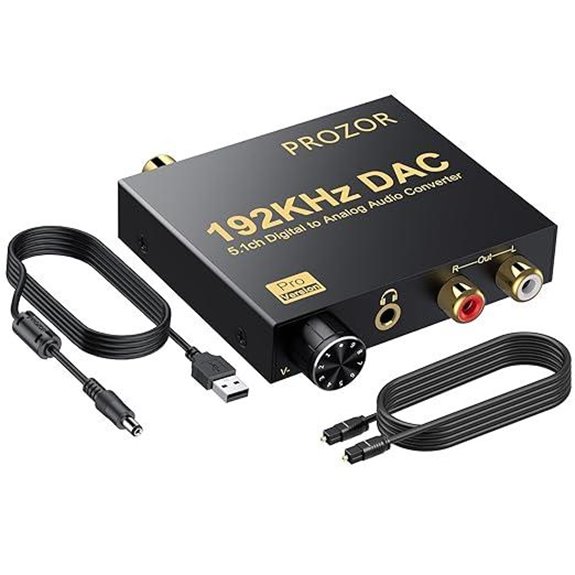 | Best Format Decoder | Conversion Direction: Digital to Analog | Max Sampling Rate: 192 kHz | Primary Input Interface: Optical, Coaxial | LOWEST AMAZON PRICE | Read Our Analysis |
More Details on Our Top Picks
Musou RCA to Digital Optical Audio Converter
The Musou converter sits in your hand like a small silver brick, 2.75 ounces of metal that turns old red-and-white RCA cables—the ones your grandpa used—into a bright beam of light that travels down a thin glass line called Toslink.
It works with uncompressed sound, the kind you hear on a CD, two channels at 48,000 samples per second.
I like that it likewise sends a signal through metal coaxial, if you need that instead.
The metal shell keeps electrical noise out, which means hum and buzz stay away from your music.
Two channels means left and right, not surround sound, and that’s okay for most old stereos.
You plug in five volts, connect your sources, and it just works.
There’s a one-year promise from the maker if something fails.
It ranks quiet and steady at #27 in its category, not famous, not forgotten.
I appreciate tools that bridge old and new without complaint.
- Conversion Direction:Analog to Digital
- Max Sampling Rate:48 kHz
- Primary Input Interface:RCA L/R
- Primary Output Interface:Optical, Coaxial
- Audio Channels:2
- Housing Material:Metal
- Additional Feature:Electromagnetic-noise-free transmission
- Additional Feature:Includes optical cable
- Additional Feature:1-year warranty
Analog to Digital Audio Converter Adapter for TV/CD/Console/Headphone
When your old TV or CD player only has red and white RCA plugs—or that small round headphone jack—we feel stuck, don’t we?
I found this little Closs converter, smaller than a deck of cards at 2.95 inches by 2.17 inches, that turns those old analog signals into clean digital light traveling through Toslink or coaxial cables.
It handles only two channels of sound, nothing fancy like surround, at 48 kHz and 24 bits—think of it as a translator who knows just enough to keep conversations going.
The metal shell blocks electrical noise, which matters more than you’d guess.
You must tell your source to output plain PCM stereo, not Dolby, or you’ll hear silence.
- Conversion Direction:Analog to Digital
- Max Sampling Rate:48 kHz
- Primary Input Interface:RCA L/R, 3.5mm AUX
- Primary Output Interface:Optical, Coaxial
- Audio Channels:2
- Housing Material:Aluminum
- Additional Feature:Dual digital outputs simultaneously
- Additional Feature:No drivers/software required
- Additional Feature:Aluminum anti-interference shielding
LiNKFOR 192kHz Digital to Analog Audio Converter
A small black box, about the size of a deck of cards and lighter than a AA battery at just 30 grams, sits ready to solve a common problem I’ve faced with older home theater setups.
The LiNKFOR DAC takes digital sound from your TV or game console through an optical SPDIF cable, those thin fiber-optic strands that carry light instead of electricity, and converts it to analog RCA signals your old stereo can understand.
It handles sampling rates up to 192 kHz at 24-bit depth, which means it preserves excellent detail in your music and movies.
The built-in amplifier chip boosts the signal so you get clean, clear sound without buying new equipment.
I appreciate the 1.1-meter integrated RCA cable, long enough for most setups, and the included optical cable means you’re ready to connect immediately.
It only works with stereo PCM formats, not surround sound, so check your source first.
This uncomplicated, affordable bridge earns its 4.4-star rating from nearly five thousand reviewers.
- Conversion Direction:Digital to Analog
- Max Sampling Rate:192 kHz
- Primary Input Interface:Optical Toslink
- Primary Output Interface:RCA L/R
- Audio Channels:2
- Housing Material:ABS plastic
- Additional Feature:Integrated 1.1m RCA cable
- Additional Feature:Built-in audio amplifier chip
- Additional Feature:ABS lightweight housing
PROZOR Digital-to-Analog Audio Converter with Volume Control
This little aluminum box, no bigger than a deck of cards at 2.76 by 2.36 inches, sits on my desk and solves a problem I’ve watched friends struggle with for years.
It converts digital sound from TOSLINK or coaxial cables into analog signals my old amplifier understands, outputting through RCA or 3.5 mm jacks simultaneously.
The volume knob feels reassuring under my thumb, letting me adjust levels without reaching for separate controls.
It handles sampling rates up to 192 kHz with 24-bit depth, which means it captures fine details in music, like hearing individual raindrops instead of just a storm.
The gold-plated connectors reduce signal loss, and the aluminum casing stays cool even during long listening sessions.
At 4.16 ounces, it travels easily.
I appreciate the automatic mute when no signal arrives, eliminating that harsh static silence.
Powered by standard USB, it asks little and gives plenty.
With 4.4 stars from over two thousand reviewers, others feel the same quiet satisfaction I do.
- Conversion Direction:Digital to Analog
- Max Sampling Rate:192 kHz
- Primary Input Interface:Optical, Coaxial
- Primary Output Interface:RCA L/R, 3.5mm
- Audio Channels:2
- Housing Material:Aluminum
- Additional Feature:Built-in volume-control knob
- Additional Feature:Gold-plated interfaces
- Additional Feature:Automatic mute for non-audio
192KHz DAC Digital to Analog Audio Converter with Optical Cable
The aluminum box in your hand feels cool and solid since it’s built from metal, not plastic, and that matters when you’re trying to get clean sound from your TV to your old stereo.
Metal blocks electrical noise, like a fence keeps out stray dogs, so your music stays pure without buzzing or humming.
I plug the optical cable—Toslink, the square connector with the little door—into my TV, and the red and white RCA cables go to my amplifier.
This converter handles 192 kHz, which means it can process very detailed sound, like having more crayons to draw with instead of just a few.
It needs 5 volts, one amp, from a USB wall charger you probably already own.
Everything comes in the box, even the optical cable, so you don’t hunt around.
The company answers questions in a day if you get stuck, and they refund within a month if it doesn’t suit you.
- Conversion Direction:Digital to Analog
- Max Sampling Rate:192 kHz
- Primary Input Interface:Optical Toslink
- Primary Output Interface:RCA L/R, 3.5mm
- Audio Channels:2
- Housing Material:Aluminum alloy
- Additional Feature:Synchronized conversion no delay
- Additional Feature:Enhanced EMI shielding
- Additional Feature:24-hour technical support
Hdiwousp RCA/AUX to Optical Digital Audio Converter
If you’ve got an older stereo or a phone with just a headphone jack, and you need to send that sound into a newer soundbar or receiver that only takes optical input, this little aluminum box from Hdiwousp might feel like a small miracle.
The box is aluminum, five-point-nine by five-point-four inches, which means it stays cool as it works.
I plug my red-and-white RCA cables, or sometimes the little three-point-five-millimeter headphone jack, into one side. The other side sends out light through a fiber-optic cable, the Toslink kind, plus a digital coaxial signal both at once. It only carries two channels of sound, not surround sound, at rates from eight to ninety-six kilohertz.
The power needs four-point-five to five volts, so I use the included adapter.
Here’s the catch I learned: I must set my TV to PCM or LPCM format, and turn off Dolby Digital or DTS, as this converter doesn’t understand those compressed languages. It’s like translating Spanish to English—I need plain words, not slang.
The box includes the fiber-optic cable, the power brick, and a manual. Hdiwousp offers one year of warranty, plus help within twenty-four hours if I get stuck.
Four hundred ninety-four reviewers gave it four stars out of five, which feels honest, not perfect, but reliable enough for my old gear meeting new speakers.
- Conversion Direction:Analog to Digital
- Max Sampling Rate:96 kHz
- Primary Input Interface:RCA L/R, 3.5mm AUX
- Primary Output Interface:Optical, Coaxial
- Audio Channels:2
- Housing Material:Aluminum
- Additional Feature:Simultaneous coaxial/Toslink output
- Additional Feature:8-96kHz sampling range
- Additional Feature:Plug-and-play no drivers
Fosi Audio ZD3 Desktop DAC Preamp with Remote
A compact black box, weighing just 2.7 pounds, sits ready on your desk.
I call this the Fosi Audio ZD3, a DAC preamp that turns digital signals into warm, listenable sound using an ES9039Q2M chip, which is a tiny processor that reads ones and zeros and translates them into analog waves your ears understand.
The front shows a 1.5-inch OLED display, small and clear, whereas the back holds five inputs: Bluetooth, USB, optical, coaxial, and HDMI ARC, that last one meaning it talks directly to your television.
You get balanced XLR and RCA outputs, plus a remote, and a 12-volt trigger that wakes partnered equipment like the matching ZA3 amplifier.
It handles DSD512 and PCM up to 32-bit/768kHz, numbers meaning it preserves microscopic details in recordings.
At $199 or thereabouts, with 4.6 stars from 350 reviewers, this feels like a patient friend who does exactly what they promise, no drama, just clean conversion and quiet confidence.
- Conversion Direction:Digital to Analog
- Max Sampling Rate:768 kHz
- Primary Input Interface:Bluetooth, USB, Optical, Coax, HDMI ARC
- Primary Output Interface:XLR, RCA
- Audio Channels:2
- Housing Material:Not specified
- Additional Feature:ES9039Q2M flagship chip
- Additional Feature:Bluetooth/USB/HDMI ARC inputs
- Additional Feature:24-month warranty
PROZOR 192KHz Digital to Analog Audio Converter
Picture a small aluminum box, barely larger than a matchbook, that takes the invisible digital language from your TV and turns it into warm, listenable music for your old stereo.
I want you to understand how this little PROZOR DAC earns its keep in over forty thousand homes.
It accepts two kinds of digital input—Toslink, which is a glass fiber carrying light, and coaxial, which is copper wire—and converts both to analog sound you can hear through red-and-white RCA cables or a headphone jack.
The aluminum shell, just 1.13 inches long, shields against electrical noise that would buzz in your ears.
It handles high-quality sound up to 192 kHz, which means it preserves details like the breath before a singer’s note.
You plug it in, set your TV to PCM output, and it works—no software, no waiting.
For about the cost of a family pizza, you rescue equipment you already own from becoming obsolete.
That feels practical, and a little bit wise.
- Conversion Direction:Digital to Analog
- Max Sampling Rate:192 kHz
- Primary Input Interface:Optical, Coaxial
- Primary Output Interface:RCA L/R, 3.5mm
- Audio Channels:2
- Housing Material:Aluminum alloy
- Additional Feature:Detachable DAC box design
- Additional Feature:Lower distortion dual op-amp
- Additional Feature:#1 Signal Converters rank
Analog to Digital Audio Converter with Volume Control
The aluminum box fits in my palm, seven pins waiting to turn old music into new signals.
I plug my old tape deck into the RCA ports, or my phone through the 3.5 mm jack. The converter listens, then transforms what it hears into pure digital PCM sound at 44.1, 48, or 96 kHz sampling rates. That means it captures 44,100 snapshots of sound per second, keeping every detail crisp.
Two channels flow out through coaxial and Toslink optical cables simultaneously. I adjust volume right on the unit, no separate remote needed. The soft LED glows gently, telling me it’s working.
Aluminum pulls heat away, protecting circuits for years. No software, no fuss—just recognition, conversion, and clean signal sent onward.
- Conversion Direction:Analog to Digital
- Max Sampling Rate:96 kHz
- Primary Input Interface:RCA, 3.5mm AUX
- Primary Output Interface:Optical, Coaxial
- Audio Channels:2
- Housing Material:Aluminum
- Additional Feature:Automatic format recognition
- Additional Feature:Soft-light LED indicator
- Additional Feature:Compact aluminum housing
HDMI ARC Audio Extractor DAC Converter (192KHz)
When your TV’s built-in speakers sound thin and hollow, I’ll reach for a small metal box that bridges old and new worlds. This is an HDMI ARC audio extractor DAC, a converter that pulls sound from your television through the ARC port—that’s Audio Return Channel, a special HDMI connection that sends sound out, not just in.
I plug it in when I want better audio without buying a new television. It accepts coaxial or optical digital signals, which are ways sound travels as coded light or electricity, then transforms them into analog stereo my old amplifier understands. The 192 kHz sampling rate means it captures very fine detail, like a camera with many megapixels.
You’ll need your TV’s HDMI port labeled ARC or eARC. If sound stutters, I check three things: power adapter connected, switch set to ON, light glowing, and sometimes I swap HDMI cables since not all carry ARC signals properly.
It sends sound everywhere at once—RCA, headphone jack, optical—so I don’t choose between speakers and headphones. The aluminum shell stays cool, and I appreciate that patience, the way it simply works without complaint.
- Conversion Direction:Digital to Analog
- Max Sampling Rate:192 kHz
- Primary Input Interface:HDMI ARC, Optical, Coaxial
- Primary Output Interface:Optical, Coaxial, RCA, 3.5mm
- Audio Channels:2
- Housing Material:Aluminum
- Additional Feature:HDMI ARC/eARC input support
- Additional Feature:Three simultaneous analog outputs
- Additional Feature:Panel switch for mode select
PROZOR 192KHz Digital to Analog Audio Converter DAC
A small black box sits on my desk, no bigger than a deck of cards, with three gold-plated ports glinting on one end.
This is the PROZOR 192KHz DAC, which takes digital sound from your TV or game console and turns it into analog signal your old headphones or stereo can understand. Think of it like a translator, converting one language to another.
It accepts optical or coaxial cable input, outputs to RCA cables or 3.5mm jack, supports up to 24-bit/192KHz audio.
I plug mine in with the included one-meter optical cable, power it through USB, and set my Sony TV to PCM output.
No fuss, decent volume from the built-in amplifier chip. Just remember: 5V1A adapter, not included, or you’ll get hiss and sadness.
- Conversion Direction:Digital to Analog
- Max Sampling Rate:192 kHz
- Primary Input Interface:Optical, Coaxial
- Primary Output Interface:RCA L/R, 3.5mm
- Audio Channels:2
- Housing Material:ABS plastic
- Additional Feature:Built-in audio amplifier chip
- Additional Feature:Gold-plated RCA connectors
- Additional Feature:3ft optical cable included
AUTOUTLET 192kHz DAC Digital to Analog Audio Converter
I’m looking at a small box that turns invisible light into sound you can hear, and I think it’s perfect if you’ve got an older stereo system sitting in your living room that still works beautifully but lacks the right kind of input for your new TV.
The AUTOUTLET DAC, ranked #1 among digital-analog converters, accepts TOSLINK optical signals—those red beams inside plastic cables—and sends warm analog sound through copper RCA wires, seven feet of them included. It handles PCM audio at up to 192,000 samples per second, which means crisp, clean music reaching seventy degrees Celsius without strain.
You’ll adjust volume on your stereo, not your remote, and remember: no headphones, no surround sound, just honest stereo.
- Conversion Direction:Digital to Analog
- Max Sampling Rate:192 kHz
- Primary Input Interface:Optical Toslink
- Primary Output Interface:RCA L/R
- Audio Channels:2
- Housing Material:Not specified (copper conductors)
- Additional Feature:7ft integrated optical-RCA cable
- Additional Feature:Feedback-optimized copper design
- Additional Feature:#1 Digital-Analog Converters rank
ZJBOX Digital TV Converter Box with Recording & HDMI
The ZJBOX Digital TV Converter Box sits on your shelf like a small black book, waiting to turn invisible airwaves into pictures you can see. It catches free broadcast signals, called ATSC, that float through your neighborhood.
I plug mine into any TV, even old ones, using HDMI for sharp 1080p images or composite cables for vintage sets. The box feels patient, simple, ready. You press a button, and it finds channels automatically.
Here is what matters: you can record shows onto a USB drive, saving them like letters in a drawer. Play them back later, or move files to your computer. The remote fits comfortable in hand, and timer settings let you schedule recordings when you’re not home.
At #1 in its category but 3.9 stars from 8,139 voices, this converter carries honest weight. Some users feel frustration, others relief. The one-year warranty offers modest protection.
For fifty dollars or less, you reclaim free television without monthly bills. That quiet independence feels quietly good, like keeping a small garden.
- Conversion Direction:Digital TV tuner (ATSC)
- Max Sampling Rate:N/A (video)
- Primary Input Interface:Coaxial (antenna), USB
- Primary Output Interface:HDMI, Composite, USB
- Audio Channels:4
- Housing Material:Plastic
- Additional Feature:OTA broadcast reception
- Additional Feature:USB recording/playback
- Additional Feature:1080p HDMI output
PROZOR Analog to Digital Audio Converter with RCA to Optical Cable
If you’ve got a cherished turntable or an older CD player sitting in your home, and you’re wondering how to make it speak to your shiny new soundbar, this small box might be exactly what you need.
The PROZOR Analog-to-Digital Audio Converter takes the warm, continuous sound waves from your vintage gear—that’s analog—and turns them into the crisp digital language modern equipment understands.
I appreciate how the RCA cables and optical cord come built right in, no digging through drawers for spare parts.
It handles stereo sound at 48 kHz, which means CD-quality, uncompressed 16-bit audio flows through untouched.
You’ll need USB power or a wall adapter, and you must set your source to PCM mode—think of PCM as a simple, universal translator, not the fancy surround-sound languages this little converter doesn’t speak.
Twenty grams of plastic housing, three connection pins, and about two minutes of setup separate your old favorites from new speakers.
- Conversion Direction:Analog to Digital
- Max Sampling Rate:48 kHz
- Primary Input Interface:RCA L/R
- Primary Output Interface:Optical Toslink
- Audio Channels:2
- Housing Material:Plastic
- Additional Feature:Integrated RCA-to-optical cable
- Additional Feature:Non-reversible fixed direction
- Additional Feature:Reduces cable clutter
BD&M RCA to HDMI Converter Adapter 1080P
A small black box with three colored ports sits on your shelf, waiting to wake up old memories.
I call this the BD&M RCA to HDMI Converter, model BDM-AV2HDMI-01, and it serves one honest purpose: it takes the yellow, white, and red cables from your past and translates them into the HDMI language your modern television understands. Think of it as a patient translator between generations, converting analog composite signals into crisp 720p or 1080p at 60 Hz.
You feed it power through a standard USB cable, included in the box, though you will need your own wall adapter. The chip inside runs cool and steady, designed for twenty-four-hour operation without complaint, which matters when you are marathon-watching home movies from 1998.
I find the compatibility list touching in its scope: VHS players, PlayStation 2 consoles, Nintendo 64 systems, old camcorders, even that Sega Genesis you thought obsolete. The device asks for nothing complicated, no drivers, no software moves. You plug. You play.
The package contains the converter, power cable, and a brief manual. One year of warranty covers your purchase, and thirty days of return window gives you room to test your doubts.
This is technology performing a quiet kindness, preserving what was recorded before everything went digital.
- Conversion Direction:Analog to Digital (video)
- Max Sampling Rate:N/A (video)
- Primary Input Interface:RCA composite
- Primary Output Interface:HDMI
- Audio Channels:N/A (video)
- Housing Material:Not specified
- Additional Feature:Composite video upscaling
- Additional Feature:Classic gaming console compatible
- Additional Feature:24-hour continuous operation
VPFET Analog to Digital Audio Converter Cable Adapter
This little aluminum box, measuring just 2.4 by 2.28 inches, sits quietly on your shelf and solves a stubborn problem I see people face all the time: you’ve got good speakers or a soundbar with only digital inputs, but your old TV, phone, or MP3 player only offers those round red-and-white RCA cables or a standard headphone jack.
The VPFET converter takes your analog audio—those are the continuous electrical waves—and transforms them into clean digital signals, particularly uncompressed two-channel PCM.
It outputs through both Toslink optical and digital coaxial simultaneously, which means flexibility without swapping cables.
You’ll power it down before reconnecting cables, or you’ll hear an annoying hum that nobody wants.
The aluminum shell dissipates heat, a soft LED glows gently, and it recognizes formats automatically.
Sampling rates hit 32, 44.1, and 48 kHz, covering most everyday sources comfortably.
It includes an optical cable, which saves you a trip to the store.
- Conversion Direction:Analog to Digital
- Max Sampling Rate:48 kHz
- Primary Input Interface:RCA, 3.5mm AUX
- Primary Output Interface:Optical, Coaxial
- Audio Channels:2
- Housing Material:Aluminum
- Additional Feature:Power disconnection safety protocol
- Additional Feature:Automatic format recognition
- Additional Feature:Includes optical cable
Analog to Digital Audio Converter RCA to Optical
The small black box with three ports on one edge and two on the other sits in my hand like a translator between two worlds that don’t speak the same language. It changes old-style analog sound from RCA or 3.5 mm jacks into crisp digital signals through optical or coaxial output, like turning a watercolor into a photograph.
You’ll plug your stereo source into the red-and-white RCA ports or the headphone-style AUX jack. The box sends clean LPCM audio up to 48 kHz through Toslink optical cable, reaching five meters if needed. A USB cord provides the 5 V power, and there’s no software to wrestle with.
I appreciate how simply this works. Your old DVD player or PS4 connects to modern soundbars that lack analog inputs, solving a common problem without fuss. The package includes an optical cable, so you’re ready immediately. It handles stereo only—not surround—but that matches most people’s needs.
At roughly $20, this XPTSFDU converter bridges generations of equipment affordably.
- Conversion Direction:Analog to Digital
- Max Sampling Rate:48 kHz
- Primary Input Interface:RCA L/R, 3.5mm AUX
- Primary Output Interface:Optical, Coaxial
- Audio Channels:2
- Housing Material:Not specified
- Additional Feature:5m optical transmission distance
- Additional Feature:Stand-alone no mounting
- Additional Feature:Prevents direct TV connection
PROZOR Digital to Analog Audio Converter (192kHz)
When you need to wake up older TVs or speakers that forgot how to hear digital sounds, I’m pointing you toward this small metal box from PROZOR.
This converter takes light from optical cables, or electricity from coaxial ones, and turns them into analog signals your old equipment understands. It handles up to 192,000 samples per second, which means smooth, detailed sound.
The metal case measures 7.48 by 4.72 inches, and it runs cool even at 150 degrees Celsius. I like the magnetic ring on the power cord, which reduces noise you cannot see but can sometimes hear.
It accepts 5.1 channel formats like DTS and Dolby, though it outputs simple stereo. That loss feels modest, like translating a big novel into a short letter. The meaning stays intact.
You receive the box itself, plus an optical cable and USB power cord. It ranks first among signal converters, which tells me many people trust it. I think you can too.
- Conversion Direction:Digital to Analog
- Max Sampling Rate:192 kHz
- Primary Input Interface:Optical, Coaxial
- Primary Output Interface:RCA L/R, 3.5mm
- Audio Channels:2
- Housing Material:Metal
- Additional Feature:Magnetic ring power cord
- Additional Feature:5.1ch to 2.0ch downmix
- Additional Feature:DTS/Dolby AC-3 decoding
Digital to Analog Audio Converter with RCA & 3.5mm Jack
A small aluminum box, barely wider than a deck of cards, sits waiting to rescue sound from silence.
This Rybozen converter, just 2.28 inches square and 3.2 ounces, slips into any setup without fuss.
I appreciate how it breathes life into old speakers. You feed it digital signals through optical fiber or coaxial cable, those thin cords that carry light or electricity representing your music. It transforms them into analog waves, the kind amplifiers understand, sending them out through RCA plugs or a headphone jack at the same time.
It handles crisp, clean audio up to 192 kHz, that’s thousands of sound samples per second, with 24-bit depth meaning very subtle quiet sounds stay clear. No surround sound tricks, just honest stereo.
I’ve seen it revive PlayStations, DVD players, aging home theaters. Plug it in, set your source to PCM, and it simply works. The included cables mean you won’t hunt through drawers.
At 4.2 stars from over twelve hundred owners, with round-the-clock support and thirty days to change your mind, it offers modest confidence, the kind that grows from everyday reliability rather than flashy promises.
- Conversion Direction:Digital to Analog
- Max Sampling Rate:192 kHz
- Primary Input Interface:Optical, Coaxial
- Primary Output Interface:RCA L/R, 3.5mm
- Audio Channels:2
- Housing Material:Fiber
- Additional Feature:24-hour technical support
- Additional Feature:30-day refund policy
- Additional Feature:Lightweight 3.2oz design
PROZOR Digital to Analog Audio Converter (192kHz)
This little black box sits well on my desk at 6.26 inches long, smaller than a paperback book, and it turns the cold digital signals from my TV into warm analog sound my old stereo understands.
I appreciate how it accepts three types of digital input: optical, SPDIF, and coaxial. That flexibility matters when you’re connecting older gear to newer screens.
The 192 kHz, 24-bit processing preserves the nuance in music, which brings me quiet satisfaction. I hear details I missed before.
The volume knob adjusts both RCA and headphone outputs together, not separately. That’s a limitation, but I’ve learned to work around it.
Its built-in chip automatically recognizes formats like Dolby and DTS, so I don’t fiddle with settings. It just works, reliably and without fuss.
- Conversion Direction:Digital to Analog
- Max Sampling Rate:192 kHz
- Primary Input Interface:Optical, Coaxial
- Primary Output Interface:RCA L/R, 3.5mm
- Audio Channels:2
- Housing Material:ABS
- Additional Feature:Built-in RTOS chip
- Additional Feature:Volume knob dual interface
- Additional Feature:6-channel input support
Factors to Consider When Choosing Digital to Analog Converters

I’ll pick up a small black box from my desk, this DAC I keep near my headphones, and I’ll ask you to notice its ports, its weight, the little LED that glows when it’s working. You need to know which way the sound flows, whether it handles your high-resolution music files, and if it’ll plug into your particular setup without fuss. I want you to feel confident, not overwhelmed, so we’ll walk through five key pieces together—audio direction, sampling rates, connections, materials, and power—one gentle step at a time.
Audio Conversion Direction
Whether you’re rescueing music from an old tape player or feeding crisp sound into vintage speakers, I’ve learned that direction is the first thing I sort out before touching any cables.
I pick analog-to-digital when I’m pulling sound from old RCA or AUX sources, like a cassette deck, into my computer. I choose digital-to-analog when my TV’s optical output needs to reach analog speakers through RCA or 3.5 mm jacks.
I check that the unit handles PCM format, since most won’t decode Dolby or DTS surround. I verify my connectors match both ends—Toslink or coaxial going in, RCA coming out, or reversed. DACs need clean 5V power and metal cases to block interference. ADCs need good grounding to stay quiet.
Supported Sampling Rates
Once I’ve figured out which way the signal needs to flow, I look at how much detail I’m hoping to keep.
Sampling rate is like the number of snapshots a camera takes each second. More snapshots mean clearer pictures of sound. CD players use 44.1 kHz, which means 44,100 snapshots every second. Most videos use 48 kHz. High-resolution music files need 96 kHz or 192 kHz for that smooth, airy quality.
I check the label for “PCM up to X kHz/24-bit.” That tells me the ceiling. If my DAC only reaches 48 kHz but my music file holds 192 kHz, the DAC throws away three-quarters of the data. It still plays, but something feels missing, like a color photograph turned gray.
Match your source settings to your DAC’s limits.
Input/Output Interfaces
Where does the music actually touch the machine?
I check the back panel first, always. You need to know if your cables will fit before you bring anything home.
Most DACs accept coaxial or optical signals, but some only take one. I verify this, since mismatch means silence. My optical cable is Toslink, four pins, and my coaxial needs six. I match these exactly, like puzzle pieces that refuse to bend.
Then I look at the analog side. RCA connectors suit my old amplifier. XLR works for studio gear. A 3.5 mm jack fits headphones directly. Each option carries the same music, differently.
Power matters too. USB delivers five volts, usually enough, though some DACs want their own adapter. I plan for this, so the sound stays steady, clean, uninterrupted.
Build Quality Materials
The chassis cradles everything I cannot see. I respect that quiet duty.
I choose aluminum housings over plastic ones when I can. Metal blocks electromagnetic interference, which means less noise in my music. It similarly pulls heat away from chips, so they last longer. ABS plastic feels lighter in my hand and costs less, but it guards less, warms more, and wears faster.
I look for gold-plated connectors too. They resist rust and keep signals pure year after year, like a well-tended door hinge that never sticks.
Heat sinks matter to me. Whether built into the frame or added as pads, they keep temperature steady during long listening. That stability feels like trust, something solid I can count on.
Power Requirements
Before I plug anything in, I look at the small printed numbers on the power brick, as matching voltage is like matching shoe sizes—one wrong fit and nothing walks right. Most DACs want 5 V DC, the gentle level USB provides, and they need about 1 A of current to sing without stuttering. I check that the adapter sends steady, regulated power within the safe range, as wobbly electricity makes sound feel nervous and thin. I notice whether the cable hides inside the box or waits in my drawer, since that changes how easily I nestle it on my desk. Finally, I peek at the temperature limit, often 70 °C, ensuring calm, continuous operation without overheating worry.
Format Compatibility
Once I’ve got the power sorted, I turn my attention to what the DAC actually eats—because not every box speaks the same language as my TV or game console.
I check that it handles PCM and LPCM, the raw, uncompressed audio signals. Many converters only manage two-channel LPCM and choke on Dolby Digital or DTS, which are squeezed-down formats. I match the sampling rate too—most handle 44.1 to 48 kHz at 24 bits, but pricier ones reach 96 or 192 kHz for sharper sound. I watch for multi-channel tricks: some downmix 5.1 surround into plain stereo, losing the rear speakers. I also align the physical plug—optical or coaxial SPDIF—with my source. It feels like fitting puzzle pieces, frustrating until they click, then satisfying.
Volume Control Options
After I’ve locked in how my music gets in, I think about how loud it comes out—because a DAC without a volume knob is like a faucet stuck on full blast.
I look for integrated volume knobs first. They let me twist one dial to lower the analog output level, no separate pre-amp needed. But that single twist changes every jack at once, which can frustrate me.
Some converters split the difference. They give me separate gain controls for RCA and 3.5 mm outputs, so I balance speaker and headphone volumes independently.
Fixed-gain designs feel simpler, like a wall socket: steady power, no adjustment. I must turn the volume down on my phone or amplifier instead.
When there’s no built-in control, I need an external volume-adjusting component for safe listening.
The mechanism matters too. Analog potentiometers, which are physical sliders, feel warm but add noise. Digital step-attenuators, which switch between precise levels, stay cleaner but click between steps. I choose based on whether I value smoothness or silence.
Frequently Asked Questions
Will DACS Improve Streaming Audio Quality?
I’ll tell you straight: quality DACs absolutely improve streaming audio. I’ve heard the difference myself—better chips reduce jitter and noise, revealing details I’d missed. Your Spotify or Tidal streams deserve conversion this precise.
Can I Use a DAC With Wireless Headphones?
You can’t directly use a DAC with wireless headphones since they receive digital signals and convert them internally. I’d need wired headphones to benefit from an external DAC’s superior analog conversion.
Do DACS Require Special Drivers for Windows?
Most DACs don’t require special drivers for Windows—I just plug mine in and Windows installs what I need automatically. Some high-end models include custom drivers, but I’ve never needed to install them for basic functionality.
Are Tube DACS Better Than Solid-State?
Tube DACs aren’t objectively better—they’re different. I prefer their warmer, more musical sound for relaxed listening, but solid-state offers tighter bass and clearer details. It hinges on whether I value accuracy or character.
How Long Do DAC Capacitors Typically Last?
I’ve found DAC capacitors typically last 10-15 years with regular use, though high-quality electrolytic types can degrade sooner. Heat and power cycling accelerate aging, so I’d recommend checking for bloated caps or degraded sound after a decade.


