Audio-Technica AT-LP120X vs AT-LP60X: Which Beginner Deck Is Right for You?

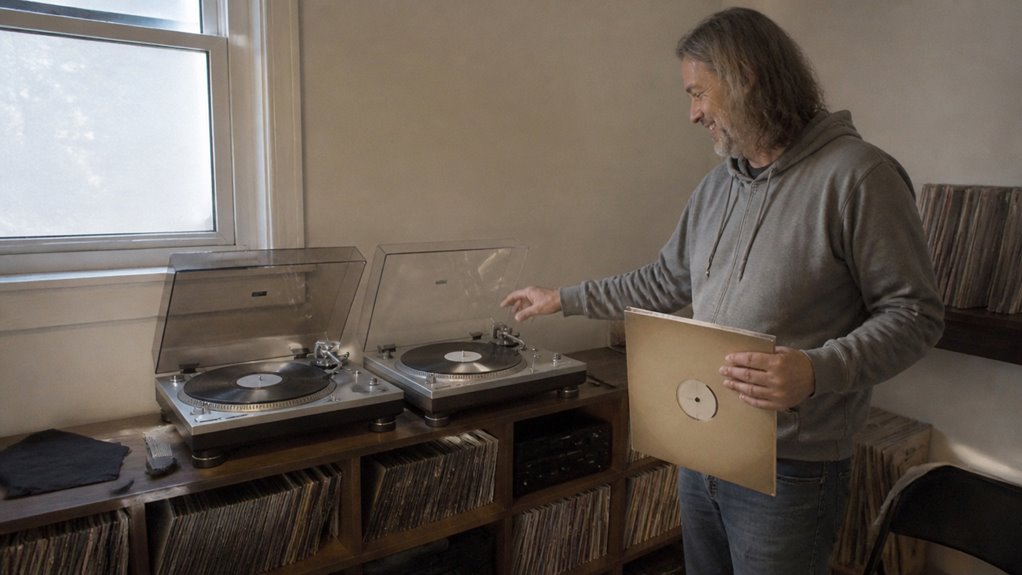
Choosing between the Audio-Technica AT-LP120X and the AT-LP60X comes down to how much hands-on control you want over your vinyl playback. If you are new to the hobby, you might be deciding whether you want a deck that adjusts tonearm weight and speed manually or one that just starts and stops with a single button.
I have spent many evenings dialing in cartridge alignment on my own table, so I know the appeal of both styles. This guide covers the key differences in manual versus automatic operation, the upgrade paths each model offers, and why your speakers will impact sound more than the turntable specs themselves.
We will also look at which features matter for 78 RPM records and which deck suits your long term listening habits. By the end, you will know whether the plug and play simplicity of the LP60X or the tweakable setup of the LP120X fits your record collection best.
Vinyl Highlights
- Choose the LP60X for automatic, plug and play listening.
- Spend more for the LP120X if you want hands on control.
- Adjust tracking force and anti skate on the LP120X only.
- Use the LP120X for 78 RPM, USB, and pitch control.
- Pick the LP60X on a budget and the LP120X for upgrades.
AT-LP60X vs AT-LP120X: Which Turntable Should You Buy?
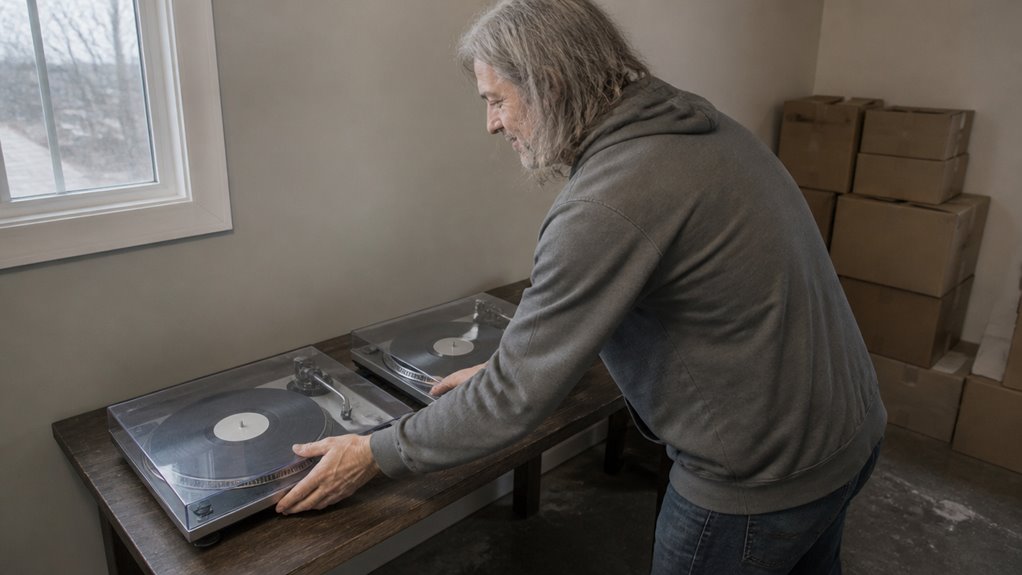
Choosing between these two turntables comes down to whether you want a simple spin-now machine or a heavier foundation for future upgrades. The price gap is stark: the AT-LP60X lists at $179, while the AT-LP120X demands $399, over double.
Choosing between these two turntables comes down to a simple spin-now machine or a heavier foundation for future upgrades. The price gap is stark.
That extra cash buys serious build weight, too: 8 kg versus 2.6 kg. The LP120X feels like a tank on your shelf and resists vibrations better, which helps keep the stylus stable in the groove.
For a first deck, the LP60X leaves money for speakers, simple as that. It is a get-it-spinning-now machine, and its built-in phono preamp means you plug it into any powered speakers and play.
The LP120X asks for a bigger system investment upfront owing to its heftier price and needed accessories, like a separate phono preamp if your receiver lacks one. It also offers adjustable tracking force and anti-skate, so you can fine-tune the tonearm as your cartridge collection grows.
If budget rules, grab the LP60X. If you crave a heavy, upgradable foundation for swapping cartridges later, save for the LP120X.
Both spin records fine. One just weighs more on your wallet.
Fully Automatic vs Manual: How Do They Operate?
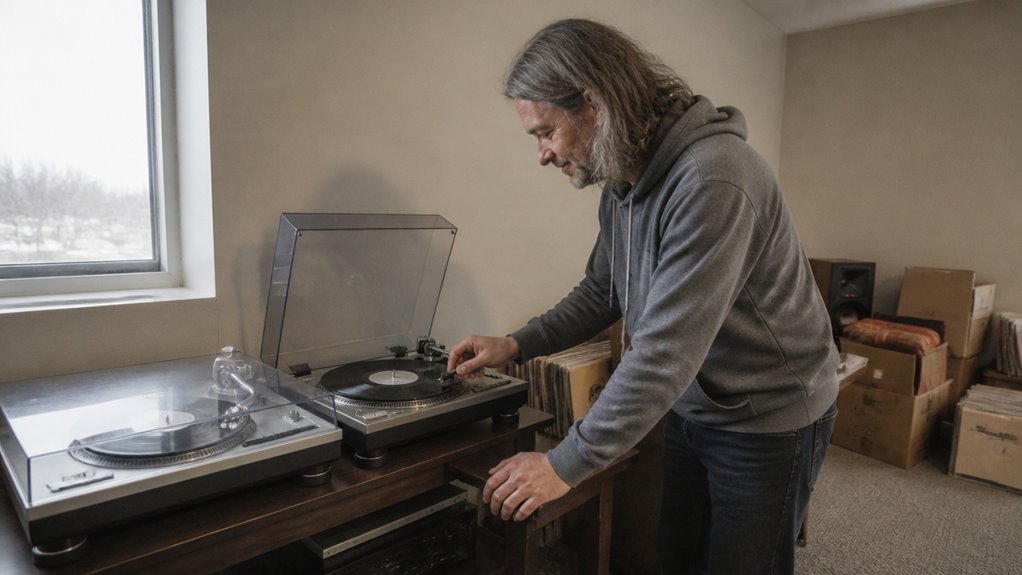
The LP60X runs fully automatic, while the LP120X is entirely manual. That single difference shapes how you interact with your records.
Press start on the LP60X and the tonearm lifts, moves over the groove, lowers, and returns on its own. The automatic arm safety is a real help for early mornings or when a curious kid wants to spin something.
The LP120X asks more of you. You cue the tonearm with a lever and set the stylus down yourself, which gives you precise control over exactly where the needle lands in the groove.
That manual cueing takes steady hands and some practice, but it also lets you drop straight into a specific track without guesswork. It suits listeners who enjoy the hands-on part of playback.
For a relaxed, hands-off session, the LP60X does the work for you. If you want to be part of the playback process, the LP120X rewards the attention.
Neither approach changes the sound of your pressing, but both change how you sit with the music. Pick the one that matches your mood, and you are ready to listen.
Sound Quality: Belt Drive vs Direct Drive Explained Simply

Two turntable designs spin vinyl with different personalities, and neither one changes how your records sound on paper. Direct drive torque starts the platter instantly, which suits DJs, while belt drive noise is the real differentiator: there is less of it.
The LP60X’s belt isolates the motor from the platter, so you hear music rather than hum. The LP120X’s direct drive uses stronger torque, and its wow and flutter (0.2%) is slightly tighter than the LP60X’s figure (0.25%).
Both hit the same 50 dB signal-to-noise ratio, so neither will embarrass you on a basic setup. Honestly, your speakers matter more than either drive system.
The LP60X sits quieter on a shelf, making it a better fit for casual living room listening. The LP120X’s solid build takes heavier use without complaint.
For spinning records without fuss, pick the LP60X; it is simpler and your ears will not complain. Vibe with the LP120X if you plan to cue tracks or scratch, and trust your cartridge and stylus to do the detailed work.
Both turntables sound fine. Buy the one that matches your habits, not the numbers on a spec sheet.
Setup and Upgrades: How Much Work Do You Really Want?
The LP60X wins for lazy listeners. Unbox, slap on the platter, push play: done in five minutes. The LP120X demands a ten-minute ritual: balance the tonearm, set tracking force, fiddle with anti-skate. One is a chore, the other a pleasure, depending on your mood.
Setup time matters less than long-term durability. The LP120X’s adjustable counterweight and detachable headshell let you swap cartridges as your ears get fussier. The LP60X is sealed, so you are limited to stylus-only changes with no real upgrade path.
Both turntables have built-in phono preamps, but the LP120X runs hotter at 240 mV versus 150 mV. Neither output is audiophile-grade, so plan for an external phono preamp if you chase better groove detail later.
| Task | LP60X | LP120X |
|---|---|---|
| Setup time | 5 min | 15 min |
| Cartridge swaps | No | Yes |
| Adjustable tracking force | No | Yes |
| Anti-skate dial | No | Yes |
| Tonearm balancing | No | Yes |
If tinkering sounds fun, buy the LP120X. If you would rather spin records, grab the LP60X. Your back, ears, and patience will tell you which one fits.
Do You Need USB, 78 RPM, or Pitch Control?
Turntable features are where you decide what really matters. The LP60X skips USB, 78 RPM, and pitch control, so it just spins records and plays music.
That simplicity suits many listeners. The LP120X adds a USB output for digitizing vinyl at 16-bit/44.1kHz, plus 78 RPM playback for old shellac discs.
It also includes pitch control to adjust platter speed by ±8% or ±16%. This helps DJs match beats more easily.
Each extra feature increases the price. The LP120X costs about twice as much, which leaves less room in your budget for speakers.
The LP60X is the better gift choice. It is automatic, simple, and less intimidating for a newcomer.
USB and 78 RPM are niche tools. Skip them unless you have a specific need to digitize records or play vintage shellac.
Who Should Buy the AT-LP60X vs the AT-LP120X?
The LP60X is the right choice for anyone who wants a plug-and-play deck without fuss. It is light, automatic, and leaves cash for decent speakers.
That fixed cartridge means no real upgrades, though. The light build also hurts long term resale value.
Gift giving is a strong fit for the LP60X. The buyer gets a simple, reliable setup in minutes.
The LP120X suits tinkerers and 78 RPM collectors. The manual setup, which includes counterweight and anti-skate, takes ten minutes.
You get adjustable tracking force, a detachable headshell, and a heavy chassis that kills vibration. The direct-drive motor also handles pitch control for DJs.
Expect to pay over twice as much for the LP120X. Budget for better speakers on top of that.
Casual listener? Go with the LP60X. Aspiring audiophile or vinyl hoarder? Go with the LP120X.
Frequently Asked Questions
Can I Connect Either Turntable to Bluetooth Speakers Without Adapters?
Neither turntable can connect to Bluetooth speakers without adapters, since both lack built in wireless transmission.
You will need powered speakers with a phono input or an external Bluetooth transmitter to go wireless, and both decks include a phono stage for such a hookup.
For a quick wired setup today, simply run RCA cables from the turntable’s line output to any powered speaker with a 3.5mm or RCA input.
If you prefer wireless, plug a Bluetooth transmitter into the same line output, pair it with your speaker, and keep the transmitter powered.
Check your turntable’s manual for the correct phono output voltage, as models vary and a mismatch can cause distortion.
In my experience, using a transmitter with aptX low latency reduces audio lag, so search for that term if you want smoother sound.
Which Model Has a Lighter Tonearm for Better Tracking?
Neither the LP120X nor the LP60X lists tonearm mass in its specs, so the lighter arm is not specified. Tracking depends more on the cartridge’s carbon cantilever and elliptical stylus than on arm weight alone.
The LP120X gives you counterweight adjustment and anti-skate calibration, while the LP60X lacks both. For a practical tip, set the anti-skate to match your tracking force, usually around 2 grams, but confirm the exact figure in your cartridge’s manual.
If you want better stylus compliance, check the cartridge maker’s recommended force range before tweaking. Models differ, so don’t guess. In my experience, proper calibration beats chasing a lighter arm. Search for “tonearm effective mass” to compare with your cartridge’s compliance.
Do Both Turntables Include a Dust Cover in the Box?
Yes, both turntables include a dust cover in the box, so you can protect your records right away. The LP60X comes with a fixed cartridge, while the LP120X offers a replaceable stylus for future upgrades.
Each lid does its job, but the heavier model’s hinges tend to last longer under daily use. For a practical tip, open the cover gently by lifting from the front edge rather than the sides to avoid stressing the plastic hinges.
If you need replacement parts later, search for “turntable dust cover hinges” to find compatible options. Check your manual for hinge alignment, since models differ slightly, and keep the lid closed when the deck is idle to reduce dust buildup on your vinyl.
What Is the Warranty Length for Each Turntable?
Both turntables carry a one-year limited warranty from the manufacturer. To start a claim, you must show proof of purchase from an authorized dealer, so keep your receipt or invoice safe.
Many retailers sell extended service plans that go beyond the standard period, which can be worth it if you plan to keep the deck long term. Check the warranty terms at the point of sale before you buy, since coverage differs by store.
For any repair, always refer to the included manual for disassembly steps and electrical safety. If you are unsure about grounding or wiring, ask a qualified technician rather than opening the unit yourself. From my experience, registering your product online right away makes future claims smoother.
Can the LP60X Play Records With a Warped Surface Safely?
The LP60X can play slightly warped records, but safety depends on the severity of the warp. Its lightweight chassis offers limited platter vibration isolation, so significant warps may cause skipping or put stress on the stylus.
Moderate warps are typically acceptable, though you should check for visual wobble before playing. For peace of mind, test a warped record with the dust cover open and observe the tonearm’s movement.
If the warp causes audible distortion or repeat skipping, stop playback to protect the stylus and record groove. You can also compare the record’s flatness against a known good pressing, since all records can develop a slight dish over time.
For a deeper concern, use a stylus force gauge rather than guessing the tracking force, since the LP60X’s manual specifies the correct range.
Rounding Up
Choosing between these two turntables comes down to how much hands-on control you want over your vinyl.
If you want zero fuss today, check the LP60X’s $149 price and its plug-and-play setup, then decide whether automatic operation is enough. If you foresee yourself tinkering later, compare that against the $349 LP120X and its room to grow with upgrades, not headaches.
Write down which features you will actually use over the next year, and listen for the difference between a set-it-and-forget-it friend and a project deck.
Match the deck to your ambition, and you will not regret the spin.