How to Grade Vinyl Records Accurately: Goldmine Standard Visual Grading Guide


Grading vinyl records accurately starts with understanding the Goldmine Standard, a visual-only system that defines the condition of your collection.

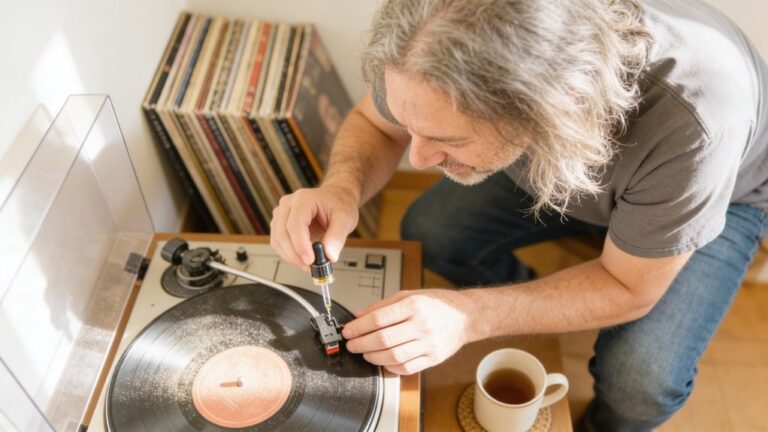
Reveals hairline scratches and groove wear clearly, so you grade with confidence.

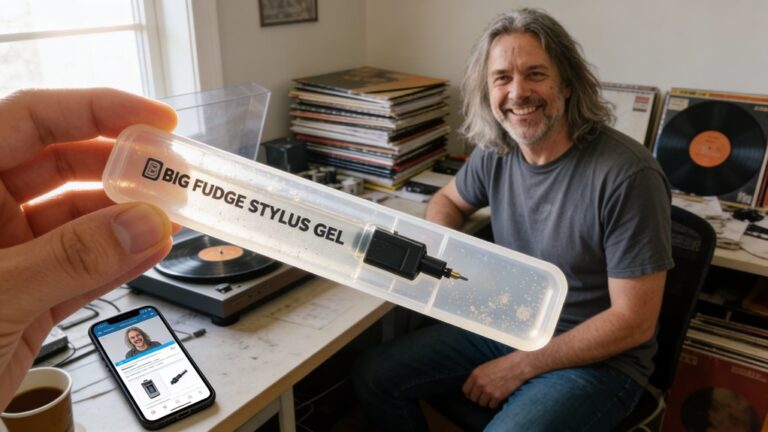
Spot subtle cover and label flaws that change a record's grade.
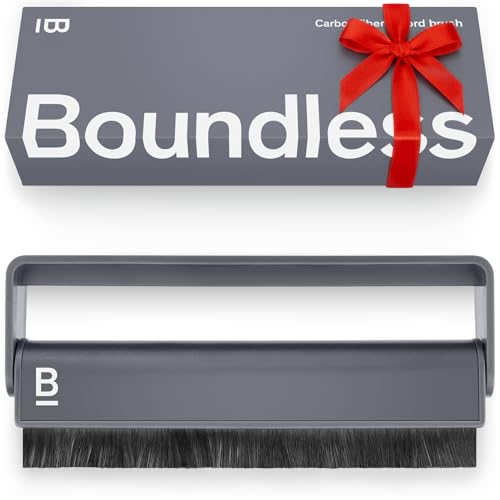
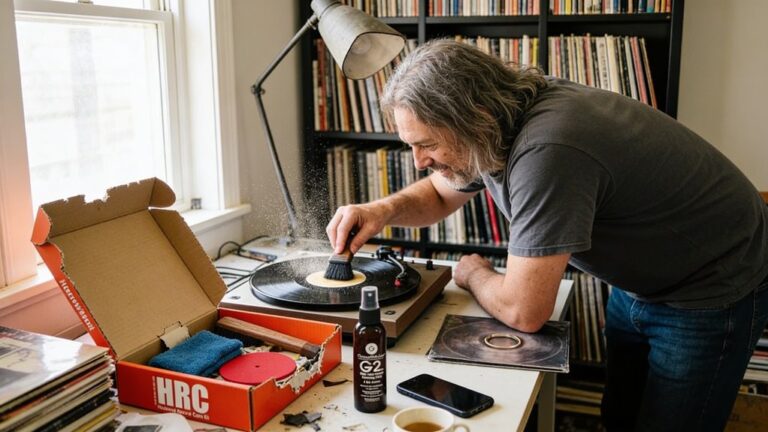
Removes dust before inspection, preventing false visual judgments.
Check discounted items inVinyl Record Inspection Tools
If you are staring at a stack of albums and wondering why some sell for a solid price while others barely get a look, you are likely dealing with confusing label scans and uncertain sleeve wear.
This guide breaks down the essentials, from why Mint is an unrealistic target to how VG+ and VG grades cause a major value gap. It also explains how to handle mixed grades on a single record and why you should always check Discogs for rare pressings before pricing anything.
You will learn to spot the subtle cover defects that separate one grade from the next, without ever relying on how a record sounds.
The practical approach here is anchored on the lower grade whenever a record has conflicting issues, so you can avoid overpaying or underpricing.
By the end, you will have a clear visual checklist to grade covers and grooves with confidence, starting with the core definitions of each grade level.
Air Purify Highlights
- Grade visually only and never factor audio playback into the condition.
- Apply the same strict grading criteria regardless of the record’s age.
- Treat Near Mint as the realistic top grade because Mint is virtually unattainable.
- Anchor mixed-condition pricing to the lower grade, then subtract 10 to 20 percent.
- Always grade one notch lower than your initial judgment to minimize buyer complaints.
Why Goldmine Is the Only Grading Standard

One grading system dominates the used-vinyl marketplace, not because it’s flawless, but because it stuck. Goldmine’s global adoption means buyers and sellers, from eBay flippers to dusty shop owners, use the same shorthand.
That’s a real advantage. But grading subjectivity still creeps in, like a skip you miss until side two.
One person’s VG+ is another’s “eh, it’s fine.” Treat the scale as a baseline, not gospel.
It’s a consensus tool, not a scientific instrument. For practical use, that works fine: you’re pricing plastic, not measuring atoms.
Learn the grades, trust your eyes, and grade a notch lower than your gut says. You’ll get fewer complaints and the occasional happy surprise.
That’s the real win. Check your cartridge alignment and listen for surface noise before you commit to a grade.
Goldmine Grading: Mint vs. Near Mint-The Realistic Top Grade
Most sellers never actually touch Mint, and that’s fine because Mint is a fantasy grade. It demands absolute perfection, verified by multiple people, and even factory-fresh records rarely qualify.
Near Mint is the realistic top grade for 99% of transactions. NM means “looks unplayed, opened once,” with shiny surfaces, no visible flaws, and no label wear.
The strict grading criteria don’t bend for age. A 1965 LP must match a 1995 one.
Collector expectations run high here, but NM delivers. You get a record that plays clean, with no surface noise, and a cover without creases or ring wear.
Price typically sits at 90–100% of listed value. Chase NM instead of Mint because it’s honest and attainable.
If you’re unsure about a record’s grade, check recent sold listings or Discogs history before you commit. That keeps everyone happy without needing a time machine.
Goldmine Grading: Vg+ vs. Vg-What Separates $20 From $5
Drop a needle on a VG+ record and you are hearing a record that has been loved, not abused. Light scuffs or faint spindle marks appear, but you will not feel groove wear through the stylus.
Visual grading puts VG+ at near mint with a couple quirks. Play grading backs that up: surface noise stays in the background, not the spotlight. That is the $20 record.
Visual grading puts VG+ at near mint with a couple quirks, and surface noise stays background, not spotlight.
VG is the $5 bargain. Groove wear becomes obvious, and a fingernail catches those scratches. Soft passages hiss, but the record still plays without skipping.
VG is a listener’s gamble, not a collector’s prize. The $15 gap buys peace of mind.
If you are selling, grade VG+ only when you are confident. Over-grading kills trust with buyers.
Buy VG for cheap spins, but do not expect magic. Check recent sold listings on Discogs if you are unsure about a pressing.
Cover Grading: Ring Wear, Seam Splits, and Cut-Outs
Flip the jacket over and the story of a record’s life unfolds in creases, scuffs, and drilled holes.
Ring wear, that pale, ghostly halo pressed from years of stacked sleeves, knocks a near-mint cover straight to VG+.
Seam splits along the top edge are common but fixable. A split spine repair can save a classic, though it never boosts the grade.
Cut out price tags mark returns or overstock, often a drill hole or notch. They automatically cap the grade at VG+.
Shrink wrap damage leaves residue or pulls gloss from the original plastic. This lowers the cover’s sheen.
Cover gloss wear shows as dull, rubbed patches. Heavy loss drops the grade to VG.
Bottom splits under an inch are tolerated at VG+. Longer ones hit G.
Sellers should disclose all flaws. Buyers should expect discounts.
A clean spine beats a perfect front every time.
Shine a Light: 5 Subtle Defects to Spot
A sharp eye under a strong lamp reveals the quiet clues that separate a fair deal from a hidden headache. For groove wear inspection, tilt the record so the light reflection angle catches the valleys between tracks.
Tilt the vinyl under a strong lamp; the valleys between tracks reveal the truth.
A dulled, gray sheen there means trouble ahead, even if surface scratches are scarce. A spindle mark check on the label, those tiny ring impressions, tells you if it spent years on a cheap turntable’s short spindle.
Label wear evaluation covers smudges, fading, or writing, which ding the grade fast. None of these are deal-breakers alone, but stack them, and that VG+ drops toward VG real quick.
Scan for all five, and you’ll dodge the sneaky ones.
Goldmine Grading: Good, Poor, Fair-When Records Drop to 10% Value
Good, Poor, and Fair grades sit below the line where a record stops being a bargain and starts being a project.
These grades slash values to 10% or less of a Near Mint copy.
A Good record might still spin without skipping, but you will hear surface noise, groove wear, and possibly label damage.
Poor and Fair copies are cracked, warped, or skip-repeating, so treat them as charity cases unless they are outrageously rare.
Good sells for 10–15% of Near Mint value.
Poor and Fair drop to 0–5%.
Heavy writing, tape, or sticker damage on covers is expected here.
Most collectors will not pay more than bargain-bin prices, which gives you buyer advantage.
Grading pitfalls exist because visual flaws might not match playback.
Always disclose defects before selling.
Only buy these as placeholders or for scarcity.
Otherwise, skip the headache.
Average Record + Cover: Simple Math for Mixed Grades
Average the record and cover grades, and list that as the overall condition. This is the Goldmine standard for mixed grades, and it works well for pricing.
A VG+ record with a VG cover usually sells closest to VG+ value, because the disc is what plays. The cover still lowers resale appeal, so list the average and note the split honestly in the description.
Average Both Grades
Two grades usually sit side by side on any price tag, one for the record itself and one for its cover. That is where the math gets interesting.
A mint cover paired with a poor record, or the reverse, splits the sell value across both conditions. The average applies to the whole package, not just the shiny part.
A VG+ record with a Good cover might fetch roughly 60–70% of the Near Mint price, depending on demand. Check recent sold listings or Discogs history for a realistic range on rare pressings.
Visual grading and audio grading are separate things. A poorly graded disc can still play fine, so check the stylus and listen before you panic.
Use a 50% weight for each grade when estimating the sell value split. Then adjust for rarity using trusted dealer input or past sales.
Collectors often accept a mediocre cover if the record spins clean. Test the record on your own turntable with proper tracking force and anti-skate to hear the groove condition.
Average the two grades, but lean conservative. Surprises favor the buyer, so keep your estimate modest.
That simple average keeps things fair, quick, and brutally honest.
Mixed-Value Calculation
The math here is simple, but the judgment behind it is not. A record grading VG+ with a cover at VG gives an average near VG+, yet value rarely splits evenly. The cover’s impact on price ratio shifts with rarity and demand. A common LP’s cover flaws matter less; a sought-after pressing’s cover can halve its worth.
| Grading Combination | Average Grade | Estimated Value (%) |
|---|---|---|
| NM record / VG+ cover | VG+ | 75–85% of NM |
| VG+ record / VG cover | VG+ | 60–70% |
| VG+ record / G cover | VG | 40–50% |
| VG record / VG+ cover | VG | 30–40% |
| G record / NM cover | G+ | 10–15% |
That table uses the price ratio from NM, not just a straight mean. For example, a $20 NM album with a VG cover might fetch $14, not $16, since collectors discount covers harder.
When averaging, weight the cover’s condition more than the record’s, especially for older pressings. Use the lower grade as your anchor, then subtract 10–20% for any cover mismatch. For rare pressings, check recent sold listings or Discogs history rather than assuming a fixed percentage.
Frequently Asked Questions
Can Visual Grading Ever Guarantee Accurate Playback Quality?
Visual grading cannot guarantee accurate playback quality, because it only estimates surface condition rather than actual sound. Subtle groove wear, pressing flaws, or inner groove distortion often remain silent until the stylus plays them.
A record that looks mint can still sound thin or fuzzy, while a cosmetically worn copy might play flawlessly. For true confidence, audition the record on your own turntable before buying whenever possible.
If you cannot play it first, compare the seller’s grading notes against known play-graded descriptions from trusted sources. Always ask whether the audio was verified, not just the visuals.
For critical listening, set your tracking force according to your cartridge manufacturer’s manual, since models differ. Visual grading is a useful filter, but only a needle drop reveals what actually matters.
How Often Should I Clean Records Before Grading?
Clean records before every grading session, as dust and residue can hide surface defects. This simple habit also reduces stylus wear and makes your visual assessment more accurate, though cleaning cannot repair groove damage that already affects playback.
Use a carbon fiber brush or a mild cleaning fluid according to the product maker’s instructions. Test any new solution on a spare record first, and wipe in the direction of the grooves to avoid pushing debris deeper.
For a quick daily routine, a dry brush before each play is enough; for grading, a deeper wet clean is worth the time. If you see haze or static, clean again before you judge the vinyl’s condition.
Do Promo Copies Always Lower a Record’s Grade?
Promo copies do not always lower a record’s grade, since grading focuses on the physical condition rather than the stamp or marking itself. A promo label can even add collector appeal for certain titles, but the actual vinyl wear and sleeve damage are what determine the final score.
Check the record under bright light for scuffs and hairlines, because these flaws affect the grade far more than a promo punch hole. Compare recent sold listings of both promo and standard presses to see if the promo carries any premium in your chosen market.
In my experience, a clean promo with a worn jacket often grades lower than a stock copy in near mint condition. Always store the promo sleeve separately to avoid ring wear, and feel free to ask a trusted dealer for a second opinion when the value is unclear.
What if Record and Cover Grades Differ Drastically?
A drastic mismatch between record and cover grades means you should split grade them, with each component listed separately.
This prevents confusion and gives buyers a clear picture of what they are getting.
Assess the vinyl condition and the sleeve condition independently, then you can mention an approximate overall range if needed.
Always describe the specific flaws that caused the lower grade, such as ring wear or surface noise, so your listing is transparent.
Use a consistent grading scale for both parts, and state the sleeve grade first or last every time to build trust.
In my experience, a photo of the cover alongside the record label helps more than any written estimate.
For a rough overall value, compare recent sold listings for similar split grades or ask a trusted dealer, since rare pressings vary widely.
You should also check your turntable and cartridge manual for proper tracking force before judging surface noise accurately.
Is Mint Ever Achievable for Modern Reissues?
Mint is achievable for modern reissues, but only under very specific conditions.
Factory-sealed, unplayed stock from a pristine pressing run can approach that grade, yet grading subjectivity means perfection is rarely guaranteed.
Check the record’s surface under a bright light before you buy, and look for visible scuffs or warps that often slip past shrink wrap.
Mint remains a collector’s ideal, not a universal certainty, so treat it as a target rather than a promise.
For near-mint alternatives, compare recent sold listings on auction sites to gauge realistic quality expectations.
Store your reissue upright in a cool, dry room, and always handle it by the edges to preserve its condition.
Grading standards vary between sellers, so ask for detailed photos or a grading note before committing.
In my experience, a modern reissue that plays silently with no surface noise is the practical benchmark for everyday enjoyment.
Rounding Up
Accurate grading comes down to careful eyes and honest math, not guesswork.
Grab a flashlight and spend ten minutes inspecting the record under strong light for visible scratches.
Write down the grade for the vinyl, then grade the cover, and average the two for a final condition.
Compare the values: a VG+ copy typically sells for four times a VG copy, think $20 versus $5.
Test your eyes by finding a single scratch that drops a record from VG+ to VG, and note how much value that costs.
Buy smart and sell fair so you never have to drop a record into the dreaded “listening copy” bargain bin.
That flashlight and ten minutes will beat a $50 mistake every time.

Protect covers from ring wear and seam splits while grading.

Keeps records dust-free and preserves labels for accurate grading.

Mends split spines neatly, preserving cover integrity and value.
See today's best deals onVinyl Record Storage & Protection