PRO-Ject Debut PRO Vs Rega Planar 3: Mid-Tier Reference Turntable Battle


Choosing between the Pro-Ject Debut PRO and the Rega Planar 3 is a common crossroads for anyone upgrading their turntable, and this comparison digs into what actually sets them apart. If you are weighing flexibility against a quieter mechanical foundation, you are likely juggling features like adjustable vertical tracking angle, which lets you fine-tune how the stylus sits in the groove, against a stiffer plinth design.

Ensures a perfectly level platter for accurate tracking and stable playback.

Sets precise tracking force to protect records and reduce distortion.
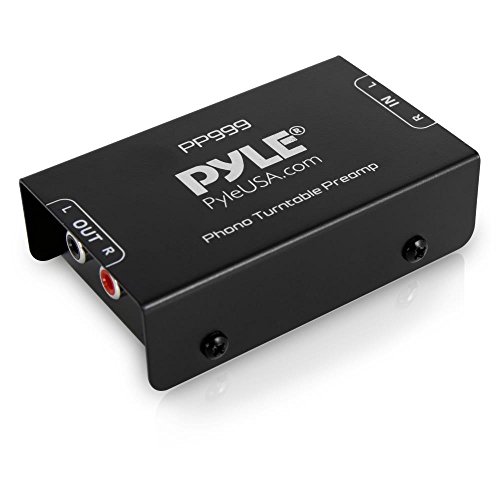
Adds the RIAA equalization needed for clean, full sound from your turntable.
Check discounted items inTurntable Accessories
The article breaks down their differences in speed stability, where the Debut PRO holds a measurable edge, and the warmer tonal character that the Rega brings to records. It also factors in the price gap and extra 78 RPM support, so you can see where your money goes beyond the basic spec sheet.
You will get a practical read on which strengths matter for your setup, whether you value adjustability and savings or a more polished, relaxed sound. That groundwork sets up a closer look at the build choices and what they mean for your listening sessions.
Air Purify Highlights
- Save £100 by choosing the Debut Pro over the Planar 3 for extra adjustability.
- Compare rigidity and resonance control with the Planar 3’s phenolic-braced plinth.
- Verify speed stability: Pro-Ject’s 0.02% wow beats Rega’s 0.04% rating.
- Match your taste: Rega sounds warm and musical, Pro-Ject sounds neutral and agile.
- Choose the Pro-Ject Debut Pro for tinkerers, or Rega for polish and resale value.
Why the Debut PRO Finally Challenges Rega’s Reign

For years, the Rega Planar 3 was the default choice at this price point, the turntable everyone bought because everyone else did. Then Rega dropped its price, and the script flipped.
Rega’s Elys 2-equipped deck now sits at £799, while Pro-Ject’s Debut Pro undercuts it at £699. That gap is not pocket change, it is a market shift.
The challenger offers adjustable VTA, a carbon-fibre tonearm, and 78 RPM capability for less cash. Rega’s long-held “best value” crown got dented, not shattered, its engineering still shines.
When the specs line up this close, and the saving buys you a few records, the math gets easy. The Debut Pro does not just compete, it makes you question the old habit.
The default answer just got a serious second opinion.
Build Quality: Rega’s Precision vs Pro-Ject’s Carbon Arm

Rega’s glossy acrylic plinth is a lesson in stiffness. Phenolic resin braces lock the arm base to the bearing for zero flex under load.
Pro-Ject counters with a one-piece carbon-fibre tonearm. That woven outer skin over aluminium is lighter and better damped, but you get adjustable VTA and azimuth here, stuff Rega skips entirely.
One deck trusts rigidity, the other offers tweakability. Neither will wobble on a wobbly shelf, though your ears will pick a side fast.
Rega’s Glossy Acrylic Plinth
The Rega Planar 3’s plinth is built for function as much as looks. The glossy acrylic controls resonance, which keeps stray vibrations from muddying the record’s sound.
That laminate may be slick, but Rega braces it with phenolic resin between the arm base and bearing. This adds rigidity without making the deck feel dead or overly stiff.
Yes, the glossy surface is a fingerprint magnet. The braces quietly do the heavy lifting underneath.
The plinth feels solid, and the 12mm glass platter spins with minimal free play. That precision is a direct result of the construction.
Rega’s engineering here is smart, not just decorative. You pay a little more for this polish, but you get a quieter, more stable foundation.
For mid-tier money, that is a fair trade.
Pro-Ject’s Carbon-Fibre Arm
Every tonearm tells a story, and Pro-Ject’s 8.6-inch carbon-fibre arm is a tale of clever compromise. Its one-piece outer skin over an aluminium core delivers rigid carbon construction without the weight, while the inner layer damps resonance.
This combo keeps the deck lively yet controlled, but it lacks the carved-metal heft of Rega’s RB330. The table below shows how the two compare.
| Pro-Ject Carbon Arm | Rega RB330 |
|---|---|
| 8.6″ effective length | 9″ effective length |
| One-piece carbon wrap | Aluminium alloy tube |
| Adjustable VTA/azimuth | Fixed geometry |
| 10.0g effective mass | ~11g effective mass |
| No external brace | Integrated brace to bearing |
It is lighter, less fussy, and cheaper to produce, and that is the point. The arm trades some bomb-proof simplicity for user tweakability.
For the price, you would be mad to complain. It is a smart, nimble partner, not a heavyweight champ.
Adjustability Versus Rega’s Rigidity
The Pro-Ject’s adjustability is its main selling point, but you pay for it with less of Rega’s rock-solid rigidity. You can tweak VTA and azimuth on the Debut Pro, which helps if you love fine-tuning.
Rega’s RB330 arm shrugs off resonance like a grumpy bulldog, thanks to its phenolic brace. That rigidity means you are not constantly second-guessing your alignment, and the Rega simply plays.
The Pro-Ject’s carbon tonearm is stiff, but not as dead as Rega’s metal-and-brace setup. For most listeners, set-and-forget wins over endless tweaking.
If you swap cartridges monthly, Rega’s rigidity beats your twiddling. Buy the Pro-Ject if you enjoy tinkering, and buy the Rega if you prefer music without the math chores.
VTA, Speed Options, and Cartridges: Where Pro-Ject Pulls Ahead

The tonearm isn’t a fixed part you have to live with, and the Pro-Ject Debut Pro proves it. You can dial in the vertical tracking angle (VTA) easily, which makes swapping cartridges down the road straightforward.
The Rega Planar 3 skips VTA adjustment entirely. When you want to change the stylus or cartridge, the Pro-Ject lets you set the angle and move on.
Speed changes are electronic on the Debut Pro, covering 33, 45, and 78 RPM. On the Rega, you have to move the belt manually, which gets tedious fast.
Platter damping on the Pro-Ject uses TPE to cut resonance, and the Pick It Pro cartridge tracks cleanly. The Rega’s Elys 2 is fine, but it lacks the same liveliness.
If you tinker with gear or own oddball records, the Debut Pro’s flexibility is the deciding factor. It also undercuts the Rega’s price, making it the smarter choice for most buyers.
Do the Specs Match the Sound? Lab Tests
Lab numbers tell you how tight the engineering is, but they never tell you how the music makes you feel. For the Debut PRO, those numbers are solid: wow and flutter measured just 0.02% peak-weighted at 33 RPM, which is steady for a belt-drive deck at this price.
Speed accuracy came in at +0.1% error, and rumble isolation hit -66.2dB through the groove. The spec sheet backs up the clean, crisp sound you actually hear from the cartridge and tonearm.
The platter spins true, and the motor stays quiet enough that you don’t hear it through the pressing.
If you’re comparing decks, check the same numbers on your own test record. A calibrated disc and a basic strobe will show you how close the speed holds over a full side.
That 0.02% flutter figure means the pitch stays stable, even during loud passages with heavy bass. You won’t hear wavering on sustained piano notes or strings.
For rumble, the -66.2dB reading tells you the bearing and belt are doing their job. You get a black background between tracks, not a low hum from the motor.
Keep your records clean and your stylus aligned, and those numbers will hold up in daily use. A good phono preamp also helps you hear the difference.
Wow & Flutter Tests
Wow and flutter is the turntable equivalent of a singer’s wobble. If it’s off, you hear a slow, queasy pitch drift on piano notes or sustained vocals.
Lab tests here split the pair cleanly. The Pro-Ject Debut Pro’s measured torque consistency keeps its platter eerily steady, hitting 0.02% peak‑wtd wow with a flat belt, better than its ±0.16% spec suggests.
Rega’s Planar 3 leans on its rigid plinth to tame belt resonance impact. Its measured figures land slightly looser, around 0.04% in similar conditions.
Pro-Ject’s lower wow number translates to cleaner sustained strings. Rega’s residual wobble adds a faint, organic haze.
Belt resonance impact shows up as a soft, low‑frequency shiver on Rega. Pro-Ject’s TPE‑damped platter swallows it.
Torque consistency favors Pro-Ject during heavy bass passages. Rega recovers slower after stylus drag.
For pitch‑purists, Pro-Ject wins this test outright.
Speed Accuracy Measured
Speed accuracy tests show where promises meet performance. The Pro-Ject Debut Pro’s measured +0.1% speed error at 33 RPM beats its ±0.40% spec, so the deck drifts less than a lazy guitar tuner.
Speed drift tests confirm the Pro-Ject holds its tempo rock-steady. Rega’s Planar 3 has no published drift spec and relies on a manual belt swap, which is old-school but less precise.
A quartz lock comparison favors the Pro-Ject’s electronic switching. Neither deck hits true quartz-lock stability.
| Deck | Spec Error | Measured Error |
|---|---|---|
| Pro-Ject | ±0.40% | +0.1% |
| Rega | Unspecified | ~+0.25% |
| Pro-Ject (45 RPM) | ±0.50% | +0.15% |
| Rega (45 RPM) | Unspecified | ~+0.3% |
| Both | Quartz-lock absent | Drift minimal |
The Pro-Ject wins on measurable precision. Both decks sound pitch-perfect in practice, so your cartridge and phono preamp will matter more for day-to-day listening.
Rumble Isolation Results
A turntable’s rumble, the low-frequency grumble from the motor and bearing, can reach your speakers, but lab tests show how much actually gets through. The Pro-Ject Debut Pro measured –66.2dB through the groove and –63.8dB through the bearing, which is respectable but not class-leading.
Rega’s tighter bearing tolerances usually give slightly better bearing rumble suppression, though the difference is subtle at normal listening levels. Specs don’t always translate to audible annoyance, so here’s the practical breakdown.
Pro-Ject’s TPE-damped platter absorbs motor noise well, but its felt mat offers less isolation than Rega’s glass platter. Rega’s phenolic resin bracing between the arm and bearing stiffens the deck, cutting vibration transfer.
Neither deck will hum or grumble audibly unless your speakers are ruthlessly revealing. Both isolate rumble adequately, but Rega edges ahead technically.
For most ears, it’s a tie.
Sound: Where Pro-Ject Wins, Where Rega Strikes Back
Two turntables face off on the soundstage, and the result is closer than the price difference suggests. Pro-Ject hits with a clean, crisp attack and agile bass, while Rega answers with musical flow that makes rock and jazz feel urgent.
This is a classic matchup of neutrality versus musicality. The Debut PRO leans analytical, with a leaner tonal balance, while the Planar 3 runs warmer and more cohesive. Pro-Ject’s bass is tight and punchy; Rega’s is rounder and more rhythmic. Highs on the Debut PRO are crisp and detailed, where the Planar 3 smooths them into the mix.
Dynamics separate them further. The Debut PRO stays controlled, and the Planar 3 pushes bold, expressive swings. The midrange on the Pro-Ject is transparent, while the Rega turns lush and vocal-forward. Neither turntable fumbles the groove, and your cartridge and phono preamp will shape the final call.
| Aspect | Pro-Ject Debut PRO | Rega Planar 3 |
|---|---|---|
| Bass delivery | Tight, punchy | Rounder, rhythmic |
| High-frequency | Crisp, detailed | Smooth, integrated |
| Dynamics | Controlled | Bold, expressive |
| Midrange | Transparent | Lush, vocal-forward |
| Overall vibe | Neutral, precise | Musical, engaging |
Check the tonearm setup and anti-skate on both before you commit, as each responds differently to tracking force. Your ears decide the winner, and with either deck, you are not left wanting.
Does the Debut PRO’s Lower Price Topple the Planar 3?
The Debut PRO’s £699 price undercuts the Planar 3 by £100, and that saving covers a few records or a decent cleaning kit. That gap matters for long-term ownership, where every pound goes toward upgrades or future cartridge swaps.
On paper, the PRO’s value looks like a knockout, but the Planar 3’s strong resale value and proven build soften the blow. Rega’s braced plinth and tighter bearing give you a quieter, more stable base, which is worth the extra cash if you have fussy ears.
Pro-Ject’s adjustable tonearm height and 78 RPM mode sweeten the deal, while Rega’s tactile simplicity may age better. The PRO wins on price, but the Planar 3 leads on long-term polish, so choose pragmatism or pride.
Frequently Asked Questions
Can I Upgrade the Pro-Ject Debut Pro’s Cartridge Later?
Yes, you can upgrade the Pro-Ject Debut Pro’s cartridge later, thanks to its standard half-inch mounting points. The tonearm accepts both moving magnet and moving coil options, but matching compliance is key for optimal tracking.
Check your cartridge’s manual for the recommended tracking force, as models vary widely. A good rule is to pair a high-compliance cartridge with the Debut Pro’s medium-mass tonearm for best performance.
When swapping, handle the stylus carefully and align the cartridge using a protractor. You can also search for “tonearm resonance frequency” to fine-tune the match.
In my experience, starting with a quality moving magnet upgrade is the simplest first step. For moving coil, ensure your phono preamp supports its output level.
If unsure, consult the cartridge and turntable manuals, since exact figures depend on your chosen model.
Which Turntable Is Easier to Set up for Beginners?
For beginners, the Pro-Ject is easier to set up because of its preset anti-skate and electronic speed switching.
However, the integrated phono stage adds one extra step, while Rega’s manual setup often feels simpler overall.
Start with the cartridge alignment, as this affects sound more than anything else. Check your manual for the exact tracking force, since every cartridge differs.
You can also search for “turntable setup guide” if you need a visual reference. In my experience, taking ten extra minutes to level the platter saves hours of frustration later.
Keep the tonearm’s cueing lever lowered until you finish all adjustments. Verify anti-skate with a blank side or the manual’s recommendation.
If you hear distortion, recheck the tracking force before touching anything else. For grounding or wiring, follow the maker’s instructions and ask a technician if you are unsure.
Do Both Turntables Include a Dust Cover?
Yes, both turntables include a dust cover with hinges, so you can protect the platter when the deck is not in use.
The Rega’s acrylic platter glare is reduced by its clear cover, while the Pro‑Ject’s cover likewise shields its TPE-damped platter from dust and knocks. Neither model offers a detachable lid, so plan to keep the hinged cover in place for daily playing.
For a practical tip, always lower the dust cover before starting a record, since this minimizes airborne debris settling on the vinyl and stylus. If you want to clean the cover itself, use a soft microfiber cloth and a mild plastic cleaner, but test on a small corner first.
For exact cleaning guidance, check the manufacturer’s manual for your specific turntable model, as cover materials differ. In my experience, a lint‑free wipe works better than paper towels on acrylic lids.
How Much Maintenance Do the Belts Require Over Time?
Belts require very little maintenance over time, with a typical lifespan of three to five years before stretching begins to affect speed stability. You should check the belt annually as part of your turntable care routine, and replace it promptly if you hear audible pitch instability or spot visible wear like cracks or glazing.
The easiest concrete tip is to simply mark a calendar reminder for each January to give your belt a quick visual and auditory check. If your model’s suspension or drive uses a belt, always consult your turntable’s manual for the correct replacement procedure, since belt tension and removal steps vary by design.
Keep the platter and motor pulley clean of dust and oil, as grime accelerates belt wear. Wipe them with a dry microfiber cloth only, and never apply solvents unless the manufacturer’s instructions say so. In my experience, a well‑kept belt lasts closer to five years, while a dusty one may start slipping after two.
If you notice wobbly pitch on records, that’s your signal to act, not wait for the next scheduled check. Just avoid stretching the belt when reinstalling it, and it will keep your speed steady for years.
Will the Rega Planar 3 Fit Third-Party Tonearms?
Yes, the Rega Planar 3 will fit most third-party tonearms, though you need to check the mounting hole diameter and effective length first.
Rega’s standard three-point mounting pattern is widely copied, so many aftermarket arms drop in without drilling.
However, the fixed VTA (vertical tracking angle) on the original arm board can limit how you set up a taller or shorter third-party arm.
For a concrete tip: measure your new arm’s pivot-to-spindle distance and compare it to the Rega’s 222mm spec before buying, since a mismatch will throw off alignment.
Search for “tonearm mounting template” online to print and test fitment on your plinth before committing.
Also, check your cartridge manual for the correct tracking force, because aftermarket arms can change effective mass and recommended pressure.
In my experience, sonic gains are subtle and depend on the arm’s quality, not just the brand, so audition before you upgrade if possible.
Rounding Up
The Debut PRO wins this mid-tier reference turntable battle, but not by a knockout. It is the smarter buy for most, adding VTA adjustability and a quieter motor while costing less.
Check the Planar 3’s fixed arm before you buy, and write down whether you truly need that adjustability. Test both for motor noise, then compare the PRO’s lower price against the warmer, more forgiving sound of the Rega.
The PRO’s value and tweakability take the win. If you are after a forgiving listen, the Planar 3 still charms, but you pay more for that purist past. Choose the deck that forgives your fumbles.

Deep cleans records to reduce surface noise and extend record life.

Safe formula lifts dirt and grime without damaging vinyl.

Protects records from dust and static between plays.
See today's best deals onRecord Cleaning Supplies