Denon DP-300F vs Audio-Technica AT-LP3XBT: Fully Automatic Turntable Shootout

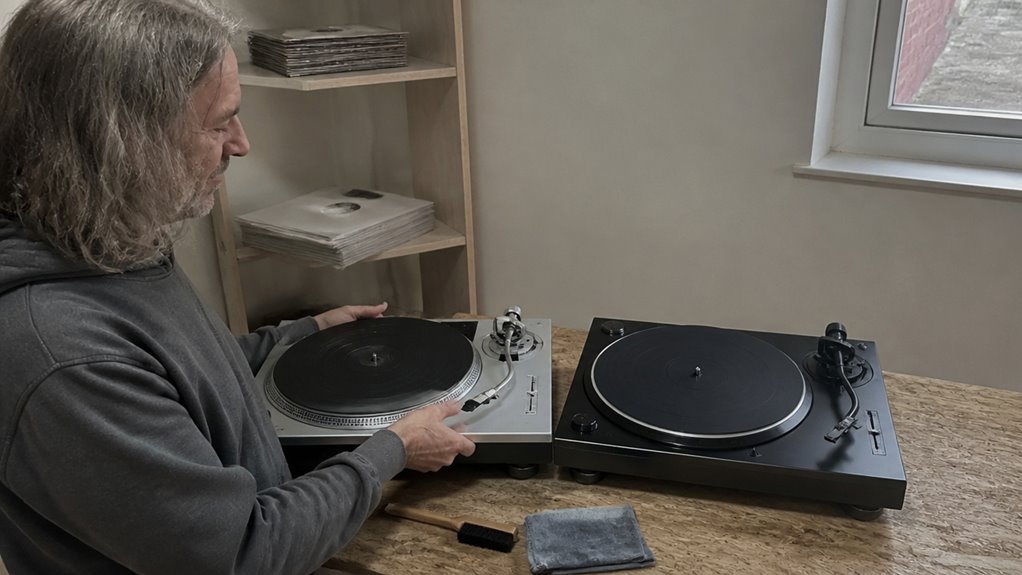
Choosing between fully automatic turntables like the Audio-Technica AT-LP3XBT and the Denon DP-300F often comes down to what you value most in your listening setup. If you are currently juggling a growing record collection with the convenience of wireless speakers or are tired of manually lifting the tonearm after every side, this comparison addresses exactly those daily frustrations.

Keeps your stylus free of dust for clearer sound.

Removes static and dust before every play.

Deep-cleans vinyl to reduce pops and crackles.
Check discounted items inRecord Cleaning
We break down the key differences in speed stability, which keeps piano notes and sustained chords from wavering, and how each model handles automatic start and return functions.
Pricing and connectivity also play a big role here, so we look at what your money gets you, particularly if you want to upgrade the cartridge later or skip a wired connection entirely. The feel of the controls matters too, since a simple lever action versus a damped, slower drop changes how gently the stylus meets the groove.
By the end, you will know which machine fits your habits, whether you lean toward flexibility or prefer a more traditional, hands-on experience. Let us start by examining how these two automatic players handle the fundamental job of spinning your vinyl at a steady pace.
Air Purify Highlights
- Choose Denon for superior speed stability with wow/flutter of 0.10% versus AT’s 0.25%.
- Pick AT-LP3XBT for Bluetooth connectivity and a VM95 cartridge upgrade path over Denon’s wired DSN-85.
- Use AT’s record size selector and hydraulic damping for easier automatic play than Denon’s manual undamped tonearm.
- Keep Denon for heavier platter vibration absorption, but note both share plastic builds and basic rubber feet.
- Save money with AT’s $30 lower price and cheaper stylus upgrades, unless analog purity matters in this fully automatic turntable shootout.
Why These Two Fully Automatic Turntables Dominate the Budget Class

Both fully automatic turntables cut through marketing noise with straightforward value. Each relies on a 300mm die-cast aluminum platter to steady rotation, but the Denon’s extra half-kilo of mass quiets vibration control better.
Build materials skew plastic on both, though the AT-LP3XBT’s external AC adapter keeps motor noise out of the signal path. Isolation feet are basic rubber pucks, fine for shelves, not dance floors.
Both turntables lean on plastic, but the AT-LP3XBT’s external power brick keeps motor hum out of your music.
Dust cover resonance is real, but the chassis damping muffles it. The DP-300F’s heavier base soaks up more rumble, while the AT counters with cleaner electronics.
You still get auto-start, auto-return, and zero fuss on either model. They dominate the budget class by skipping gimmicks and nailing the fundamentals.
Price Check: Does the $120 Gap Between These Fully Automatic Turntables Make Sense?
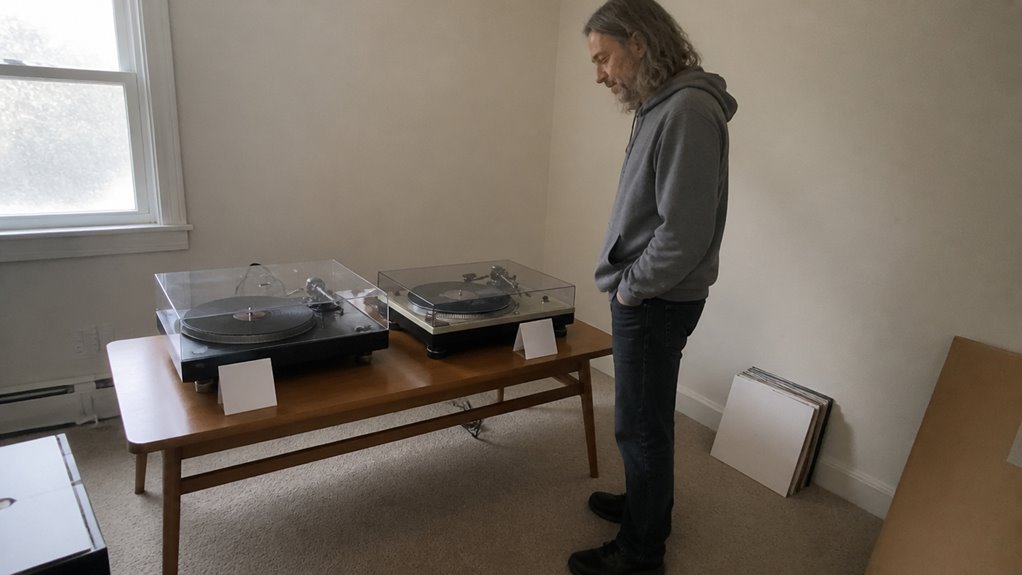
The $120 gap between the Denon DP-300F and the Audio-Technica AT-LP3XBT is fair, but which one wins depends on your priorities. The AT-LP3XBT adds Bluetooth output for wireless convenience, though purists may notice audio latency. The Denon skips Bluetooth entirely.
Cartridge upgrades shine on the AT-LP3XBT. You can swap in a $50 elliptical stylus for better detail, while the Denon is limited to its DSN-85 line.
| Feature | Denon DP-300F | AT-LP3XBT |
|---|---|---|
| Price (street) | $349–$499 | $379–$470 |
| Bluetooth | No | Yes |
| Cartridge upgrade path | Limited (DSN-85) | Excellent (VM95 series) |
If you want wireless listening and future cartridge tweaks, the extra money makes sense. For strict analog fans, the Denon’s lower wow and flutter might justify its price.
Pay for features you will actually use, not specs you will forget.
Speed Stability: Denon DP-300F vs. Audio-Technica AT-LP3XBT

The Denon DP-300F wins the speed stability contest on paper. Its rated wow and flutter is 0.10% WRMS, while the Audio-Technica AT-LP3XBT sits at <0.25%, a real gap in platter spin consistency.
For a casual listener, that difference may fade into the music. With sustained piano notes or synth pads, the Denon’s tighter control keeps pitch wobble far less noticeable.
Wow and flutter measures speed fluctuations, and lower is better. The Denon quietly takes this round, though the AT’s belt drive still stays admirably steady for its price.
Wow & Flutter Rates
Speed stability, measured through wow and flutter, is where these two turntables truly separate. The Denon DP-300F rates 0.10% WRMS, while the Audio-Technica AT-LP3XBT sits at <0.25%, a clear step behind in rotational accuracy.
On a well-recorded piano track, the Denon holds pitch like a metronome. The AT adds a faint, watery shimmer to sustained notes.
Neither deck will ruin your vinyl, but the Denon’s tighter speed control becomes audible on longer, slower passages. If you own lots of classical or acoustic records and want precise timing, the DP-300F wins outright.
The AT-LP3XBT handles casual listening fine, though it won’t offer studio-grade consistency. Choose the Denon for accuracy, or the AT for budget convenience.
A steady platter also reduces stress on the stylus as it tracks the groove, which helps preserve the pressing over time. For the AT, a quick check of the tonearm’s anti-skate and tracking force keeps things running smoothly.
Platter Spin Consistency
The Denon DP-300F delivers noticeably tighter speed control than the Audio-Technica AT-LP3XBT. Its wow and flutter rating of 0.10% WRMS beats the AT’s <0.25%, which translates into pitch stability you can hear on long piano notes.
The Denon’s heavier platter provides better inertia, keeping momentum steady through heavy passages. The AT-LP3XBT, while capable, shows slight wavering under load.
Denon’s belt system accelerates quickly, then settles, while the Audio-Technica feels laggy on start. Platter mass differs too: the Denon’s 5.5 kg total unit weight gives more heft for a steadier spin.
In a real-world test, sustained violin strings waver on the AT but stay solid on the Denon. Speed drift over 30 minutes shows the Denon holding steady, while the AT drifts slightly at 45 rpm.
If pitch consistency matters to you, the $120 premium buys real stability. The Denon wins for consistency, especially at 45 rpm.
Automation Compared: Record Size Selectors, Hydraulic Damping, and Manual Lifters
The Audio-Technica AT-LP3XBT and Denon DP-300F split on automation: one offers a set-it-and-forget-it drop, the other puts you in control of the tonearm.
The AT-LP3XBT has a record size selector for 12-inch and 7-inch discs. Swing the tonearm over and the platter spins on its own, while hydraulic damping slows the descent so the stylus lands gently.
Set the size, swing the arm, and the AT-LP3XBT lowers the stylus with hydraulic grace.
The Denon skips the size switch and uses a manual lifter. You guide the tonearm by hand, which gives you precise control over the cueing point, but a shaky hand can drop the stylus hard.
The AT-LP3XBT handles 10-inch records manually anyway, so the auto-size detection only saves you on the standard formats. The Denon relies entirely on your touch, with no damping to soften the landing.
Pick the AT-LP3XBT if you want the cartridge to settle into the groove without fuss. Pick the Denon if you prefer feeling the tonearm’s movement and setting the stylus exactly where you want it.
Cartridge and Tonearm Upgrade Paths: Which Turntable Gives You More?
Upgrade potential is where these two turntables clearly part ways. The AT-LP3XBT wins on cartridge options alone, thanks to its VM95 family.
The Denon’s DSN-85 is a dead end, with few aftermarket styli to choose from. A decent elliptical stylus for the Audio-Technica starts around $35, while Denon replacements are scarce and pricier.
Both turntables offer superb head shell flexibility. The AT’s standard mount makes cartridge swapping a five-minute job.
The AT’s higher output of 4 mV mates better with budget phono preamps. Its tonearm, with a 222 mm effective length, also allows more precise alignment.
Denon’s 10-gram cartridge limits your compliance choices at the head shell. The AT’s 6.1-gram pick works with a far wider range of tracking force and anti-skate setups.
If you plan to tinker, the Audio-Technica is the smarter buy.
Bluetooth, Phono Stages, and Connectivity Features for Fully Automatic Turntables
The Audio-Technica AT-LP3XBT is the only one of these two that speaks Bluetooth, so you can pair it with wireless speakers and skip a receiver entirely. The Denon DP-300F stays fully wired, which suits purists who prefer a direct connection.
Bluetooth latency creates a small delay between the stylus hitting the groove and the sound leaving the speaker, so DJ-style scratching is off the table. For casual background listening, that lag rarely matters.
Both turntables include a switchable phono preamp, so you can toggle between its internal output and a bypass for an external phono stage. The Denon’s phono output runs hotter at 150 mV, which can give it a slight edge in signal strength.
The Audio-Technica uses an external AC adapter, which keeps its power supply hum lower than the Denon’s internal design. In wireless mode, though, the AT-LP3XBT sounds a bit boxed-in compared to its wired performance.
If you need to ditch cables and go wireless, pick the Audio-Technica AT-LP3XBT. If sound purity matters more than convenience, the Denon DP-300F wins on straightforward, stable playback.
Frequently Asked Questions
Do These Turntables Support 78 RPM Records?
Neither of these turntables supports 78 rpm records; they are limited to 33 1/3 and 45 rpm speeds. For 78 rpm playback, you will need a separate machine with a dedicated motor and pickup.
Check your cartridge’s manual for a stylus option rated for 78s, since standard needles can wear quickly on shellac. A practical tip is to use a separate cartridge or headshell to avoid switching back and forth. Look for a turntable that offers a variable speed control or a built-in 78 setting, rather than relying on an adapter. If you play old shellac, verify the correct tracking force from the cartridge maker, as models differ.
Which Turntable Has a Heavier, More Stable Platter?
Neither turntable has a heavier platter, as both use identical 300 mm die-cast aluminium discs. What really sets them apart is stability, which comes from weight distribution and resonance control, not sheer mass.
The Denon’s internal motor isolation adds perceived heft, while the Audio-Technica’s external adapter does a better job of dampening vibration. If you want a quick improvement today, try placing a soft mat between the platter and the record to reduce resonance.
A simple cork or rubber mat can change the sound more than a few extra grams of platter weight. For matching the correct tracking force, check your cartridge or turntable manual, since models differ. In my experience, fine-tuning the anti-skate is just as important. Search for “platter damping” to find more targeted advice.
Can the Dp-300f’s Cartridge Be Upgraded Easily?
Yes, the DP-300F’s cartridge can be upgraded easily thanks to its detachable headshell, which simplifies alignment and replacement.
You only need a small screwdriver and a bit of patience. Swap the whole headshell for a pre-mounted cartridge to avoid fiddly wiring.
Just remember to check your phono preamp’s gain settings, as the stock output is lower than many aftermarket options.
For tracking force, consult the cartridge maker’s manual, since every model differs slightly.
In my experience, this upgrade path delivers clearer mids and tighter bass without professional help. A quick search for “moving magnet cartridge upgrade” will point you toward compatible choices. Always double-check the headshell’s overhang using the included protractor for best results.
Does the At-Lp3xbt’s Bluetooth Add Noticeable Audio Lag?
Yes, the AT-LP3XBT’s Bluetooth does add noticeable audio lag, typically over 100ms, which can throw off lip sync and beat matching.
The aptX codec helps a bit, but it does not fully fix the delay, so wired use remains the most reliable path. If you must go wireless, try switching your TV or receiver to a low-latency audio mode, but keep the RCA cables handy for critical listening.
For vinyl, the extra processing in Bluetooth can also soften transients, so compare the same record through both outputs. A related term is “wireless turntable latency,” which often surfaces in forum discussions.
For a precise fix, check your turntable’s manual for the Bluetooth version and any firmware updates, since models differ. Otherwise, stick to the wired phono output for any serious audio work.
Are Replacement Belts and Parts Readily Available for Both?
Yes, replacement belts and parts are readily available for both models, with belt sourcing simplified through numerous dealers and third-party parts ensuring long-term maintainability.
The Denon’s longer tenure further widens aftermarket options, while the Audio-Technica benefits from legacy component compatibility.
For a practical tip, search using the model number plus “drive belt kit” rather than just “belt,” as that often surfaces the correct size faster.
Check your turntable’s manual for the exact belt dimensions or motor pulley type, since even similar models can differ.
In my experience, buying a spare belt now is wise, as stock can fluctuate with older decks.
If you are unsure about fit or tension, ask a local repair shop that handles vintage gear before ordering.
Rounding Up
Choose the Denon DP-300F for out-of-the-box simplicity, or the Audio-Technica AT-LP3XBT if Bluetooth is your lifeline.
That $120 gap buys wireless freedom and a better phono stage, which is real value for most living rooms.
Check whether you actually stream to speakers before spending; if you never do, save the cash.
Listen for the steadier, calmer Denon against the Swiss Army knife Audio-Technica with more tools and tricks.
Test the wireless anchor on the AT-LP3XBT if you need it; otherwise, the Denon is the reliable lighthouse.
Pick your harbor based on your own listening setup, not on features you will never use.

Upgrade your cartridge for richer detail and tracking.

Adds stability and reduces vibration for better sound.
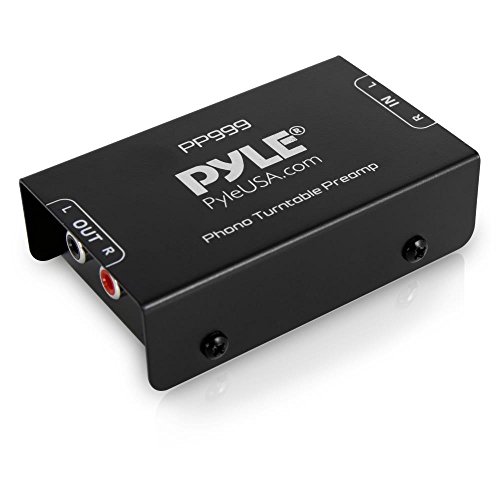
Improves signal quality for a cleaner, louder output.
See today's best deals onTurntable Accessories