Fluance RT85 vs Pro-Ject Debut Carbon EVO: Acrylic Platter and Cartridge Shootout

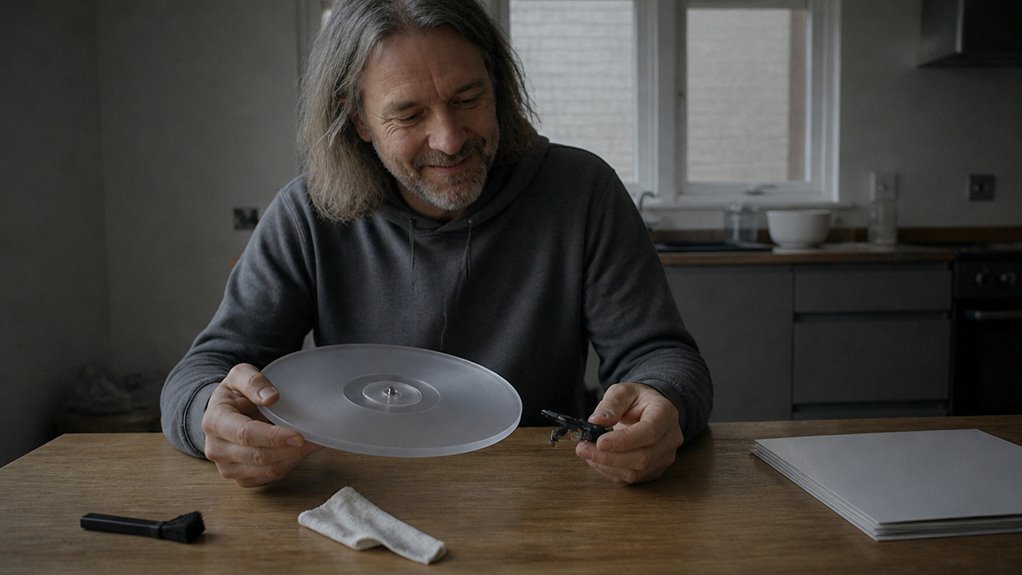
Choosing between the Fluance RT85 and the Pro-Ject Debut Carbon EVO comes down to what you value more: the cartridge and platter or the tonearm and speed flexibility.
If you are at the point where your current turntable’s sound feels a bit flat or detailed enough, you are likely weighing upgrades that improve both playback and long term versatility.
This article breaks down how the acrylic platter and Ortofon 2M Blue on the Fluance deliver quieter, more detailed sound right out of the box.
It also looks at why the Pro-Ject’s carbon fiber tonearm, which holds the stylus assembly, might serve you better when you eventually swap cartridges.
We cover how the price difference relates to electronic speed control and 78 rpm support, which matter for certain records in your collection.
The tonearm differences are where the real trade offs come into focus.
Air Purify Highlights
- Choose the RT85 for its acrylic platter that lowers surface noise.
- The EVO’s carbon tonearm lets you upgrade cartridges more easily.
- Expect the 2M Blue to reveal more detail after a 20-hour burn-in.
- Switch speeds electronically on the EVO, while the RT85 uses manual belt changes.
- Paying $100 more for the EVO adds speed flexibility and future upgrades, but the RT85 offers better value right away.
RT85 vs EVO: Which Cartridge Sounds Better Out of the Box?

The Fluance RT85 wins out of the box, and the reason is simple: it comes with the Ortofon 2M Blue, a cartridge that sells for around $230 on its own. That nude elliptical stylus pulls detail from the groove that the Sumario Rainier skips over, and you will hear it in cymbals and vocals right away.
Cartridge burn-in is real, and the 2M Blue needs about 20 hours to settle into something exceptionally smooth. Budget for the stylus replacement later, though: a new 2M Blue stylus runs roughly $150, while the Rainier’s is about $100.
That higher cost is the price of the extra detail. For pure out-of-box sound, the Fluance is the clear, easy pick.
Why the EVO’s Carbon Fiber Tonearm Outperforms the RT85 for Upgrades

The EVO’s one-piece carbon fiber tonearm kills resonance, so a new cartridge actually performs closer to its potential. That matters if you plan to swap cartridges, which is the whole point of an upgradeable turntable.
The RT85’s aluminum S-arm works fine, but it limits how far you can take a cartridge upgrade. Put a pricier moving coil on the Fluance, and you will hear the arm’s limitations.
On the EVO, the same cartridge sounds cleaner and more controlled. You are buying a platform, not just a cartridge.
On the EVO, the same cartridge sounds cleaner and more controlled—you’re buying a platform, not just a cartridge.
The RT85’s bundled 2M Blue is lovely today. The EVO lets you climb higher later, so if you like to tinker, its arm earns its keep.
Does the RT85’s Acrylic Platter Reduce Static and Surface Noise?

The RT85’s acrylic platter reduces static and surface noise, but what you hear depends on the source. Unlike metal platters that pair with felt mats, acrylic dissipates static charge before it builds up, so the noise floor gets quieter with less crackle and pop.
The platter will not fix a worn record or a noisy cartridge. It only cleans up the background. For $499, the RT85 pairs that acrylic deck with the 2M Blue cartridge for a cleaner playback experience than most felt-mat turntables.
If static is your main problem, this platter is a solid, budget-friendly shield. It works, but damaged grooves will still sound damaged.
Speed, Wow/Flutter, and Price: The Specs That Tip the $100 Decision
Speed specs are where the Fluance and the EVO split apart. The EVO switches speeds electronically for 33, 45, and 78 rpm, while the RT85 requires moving the belt by hand.
That 78 rpm setting matters if you collect shellac records, and the Fluance simply cannot play them. Wow and flutter figures favor the RT85 at 0.07 percent against the EVO’s 0.15 percent, but the EVO’s heavier platter smooths out rotation in real use.
The price gap is $100, with the RT85 at $499 and the EVO at $599. That extra hundred buys speed flexibility and a tonearm that will hold up better over time.
If you need 78 rpm or plan to upgrade cartridges later, the EVO is the better spend. Otherwise, keep the $100 and go with the Fluance.
Frequently Asked Questions
Can the RT85 Play 78 RPM Records Without Modifications?
No, the RT85 cannot play 78 RPM records without modifications. It is built for 33 and 45 RPM only, and its motor and platter are tuned for modern vinyl, not shellac.
You would need a separate 78 RPM player or a custom speed controller, which is rarely worth the effort. Check your cartridge’s manual for stylus compatibility, since 78s need a wider tip to track those grooves safely.
If you own old shellac discs, treat them as collectibles. Compare recent sold listings on auction sites for a realistic value, and ask a trusted dealer before playing them on any turntable.
Do Both Turntables Require an External Phono Preamp?
Yes, both turntables require an external phono preamp because neither has a built in phono stage. This means you will need to add a separate box to boost the cartridge’s tiny signal to line level for your amplifier.
You have many external preamp choices, from compact budget models to high end audiophile units, so matching is flexible. Factor this extra cost into your setup from the start, and keep interconnect cables short to reduce noise.
For a concrete step, check your cartridge’s manual for its recommended loading capacitance or resistance, then set that on your preamp if it allows adjustments. If you are unsure, start with the default settings and compare the sound, as models differ. Search for “phono stage gain” to see how output voltage matters for your system.
Which Turntable Is Easier to Set up for a Beginner?
For a beginner, a turntable with a pre-adjusted anti-skate and a universal headshell is easier to set up. The Fluance RT85 fits this need, as its stable feet and pre-set adjustments remove guesswork, unlike fixed headshell models that demand meticulous tonearm balancing.
Start by only setting the tracking force, which your cartridge manual specifies. Do not touch the anti-skate or leveling feet, since they are already dialed in from the factory.
If you ever swap cartridges, a universal headshell lets you mount and align it off the turntable, which is far simpler. Always check your turntable’s manual for the exact tonearm height and alignment, as these settings vary by model. This approach reduces the learning curve while still teaching you the basics of cartridge setup.
How Does the Evo’s Fixed Headshell Affect Cartridge Swaps?
A fixed headshell makes cartridge swaps more demanding, as you must carefully align the cartridge within a confined space. You will need extra patience and often a protractor to get the overhang and offset angle right.
This adds time to every upgrade, but it is a tradeoff for a rigid, stable tonearm that many listeners enjoy. To ease the process, mount the cartridge loosely, then use a two-point protractor to set alignment before fully tightening the screws.
Check your turntable’s manual for the correct tracking force range, since models differ and over-tightening can warp the headshell. The fixed design also reduces resonance, which some prefer over detachable-shell convenience. Search for “tonearm alignment protractor” if you need a refresher on the steps.
Is the Rt85’s Acrylic Platter Compatible With Aftermarket Mats?
Yes, the RT85’s acrylic platter is compatible with aftermarket mats, so you can swap them freely if you wish. That said, the platter’s built-in static control already solves the felt-mat cling issue, making an extra mat largely redundant for most listeners.
If you do add one, choose a thin cork or rubber mat to avoid altering the platter’s resonance. A concrete tip: check your cartridge’s stylus height after any mat change, since added thickness can shift the vertical tracking angle.
In my experience, the sonic gains are often subtle, so experiment with what you have before buying new. For the best alignment, confirm the correct tracking force in your cartridge manual, as models differ. Ultimately, the platter’s design strengths mean the mat matters less than your phono stage and speaker setup.
Rounding Up
For most people, the EVO wins because its tonearm and cartridge form a better foundation than the RT85’s acrylic platter. The smarter $100 bet is to start with the EVO, then save cash for a future cartridge upgrade.
Check your current turntable’s tonearm quality before spending on a new cartridge. Write down what the RT85’s platter really adds to your listening, beyond looks. Listen for the EVO’s superior tracking on your own records, not just specs.
A better tonearm will always reveal more from any cartridge you mount. Buy the foundation that grows with you, not the one that stalls you.