U-Turn Orbit Plus vs Fluance RT82: Customizable American Craft vs Canadian Wood Classic


Choosing between the U-Turn Orbit Plus and the Fluance RT82 means weighing two distinct approaches to the same turntable upgrade. If you are trying to decide which deck fits your setup, you are likely torn between a hand-built, customizable option and a feature-packed classic with a wood finish.
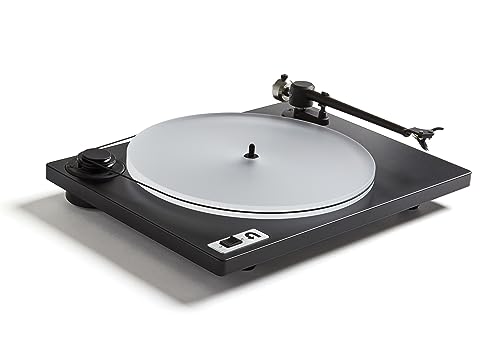
Hand-built with acrylic platter for clean analog sound

Servo motor and auto-stop for reliable convenience

Shop top-ratedTurntableson Amazon
The Fluance brings a self-correcting motor for steady speed and an auto-stop, while the U-Turn offers the craftsmanship and acrylic platter that define its appeal. This article breaks down the key differences in drive system, cartridge, and build so you can pick the right one for your records.
You already know the price range, but the real question is how each handles your daily listening habits. From the Ortofon OM10 on the Fluance to the counterweight adjustments on the U-Turn, these details change how your records sound and how easy they are to use.
We will walk through the speed accuracy, cartridge quality, and convenience features that settle this matchup, leaving you with a clear verdict.
Air Purify Highlights
- Choose the Fluance RT82 for its servo motor with 44% better wow and flutter specs.
- Select the U-Turn Orbit Plus for its included acrylic platter instead of aluminum.
- Swap cartridges easily on the RT82 thanks to its detachable headshell.
- Rely on Fluance’s auto-stop and damped cueing for convenient operation.
- Pick U-Turn for a three-year warranty and hand-built quality, not customization.
Why the U-Turn Orbit Plus Costs More Than the Fluance RT82

The U-Turn Orbit Plus costs $50 to $100 more than the Fluance RT82 because the price gap covers real differences you can feel. The Orbit Plus includes hand assembly in Massachusetts, a precision-machined acrylic platter, and a magnesium tonearm as standard. The RT82 starts cheaper with a heavier aluminum platter and a better stock cartridge, the Ortofon OM10. So value justification is not simple.
For the extra cash, you get better wow-and-flutter specs, which means less speed wobble. You also get a quieter signal-to-noise ratio and a solid, powder-coated MDF build. But you sacrifice auto-stop and a detachable headshell.
The price gap makes sense because you are paying for tighter engineering, not flashy features. If steady playback and quiet surfaces matter more than quick cartridge swaps, the Orbit Plus earns its premium. If not, save the money.
Solid Wood vs Veneer and Acrylic vs Aluminum: What Matters?
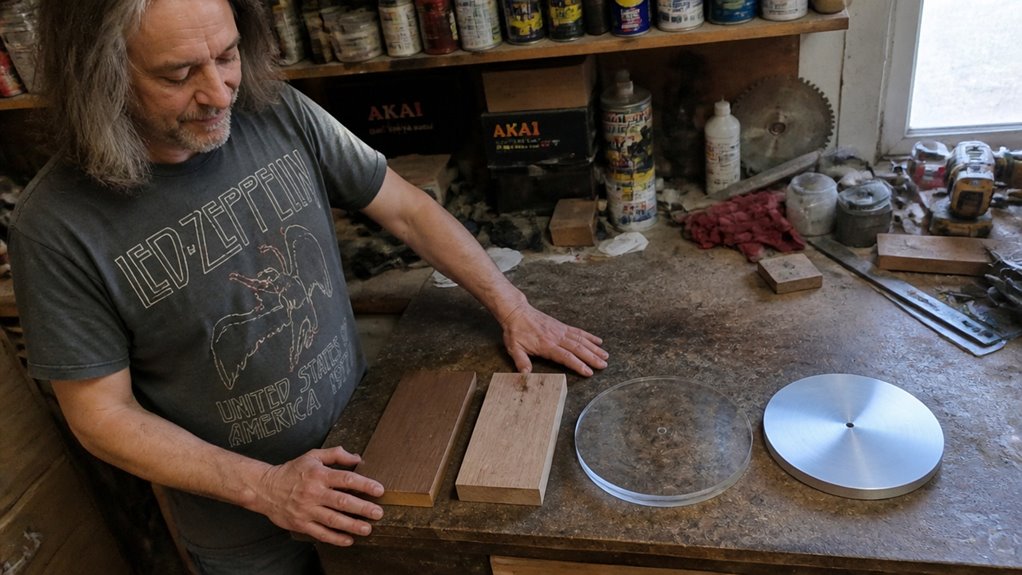
The build materials on these two turntables are where the money goes, but not always in the way you’d expect. Solid wood resonance is real, and the Orbit Plus’s hardwood option damps vibrations naturally. The Fluance’s veneer over MDF can ring slightly.
Platter damping matters more here. The Orbit’s grooved acrylic reduces wow and flutter, while the RT82’s aluminum needs a rubber mat to tame its ping.
Platter damping matters most; acrylic wins over aluminum unless you add rubber.
Finish durability is a trade-off. The Orbit’s powder coat shrugs off scratches, and the Fluance’s glossy veneer chips easier, though it looks richer.
For most, the RT82’s platter is fine until you upgrade to acrylic later. If you hate vinyl glare and want a warm, quiet floor, the Orbit Plus’s solid wood and acrylic combo wins.
Buy for platter damping first, wood second.
Servo Motor vs Synchronous Motor: Which Delivers Steadier Speed?

The servo motor in the Fluance RT82 checks speed 500 times per second, delivering tighter speed precision than the synchronous motor in the U-Turn Orbit Plus. That shows up in the specs: 0.07% wow and flutter for the RT82 versus 0.125% for the Orbit Plus.
Synchronous motors rely on AC line frequency, which is stable but can drift slightly over time. The servo’s active correction keeps the platter locked on target, making it the clear winner for steady playback.
If you value consistent pitch across long tracks, the RT82’s servo edge justifies the $50 price gap. The Orbit Plus still holds its own for casual listening, where minor speed drift is less noticeable.
Servo Speed Precision
The Fluance RT82 and U-Turn Orbit Plus differ most in their motor design: a servo-controlled DC unit versus a synchronous AC motor. The RT82’s servo checks speed 500 times per second, locking onto 33 or 45 RPM with a measured 0.07% wow and flutter.
The Orbit Plus relies on the AC motor’s fixed grid frequency, which delivers acceptable but less precise torque consistency. Its wow and flutter rating sits under 0.125%, and it offers no active speed correction.
| Feature | Fluance RT82 | U-Turn Orbit Plus |
|---|---|---|
| Motor type | Servo DC | Synchronous AC |
| Wow & flutter | 0.07% | <0.125% |
| Speed correction | 500× per second | None |
| Platter weight | 1.22 lb aluminum | Grooved acrylic |
For steady spins, the RT82 wins because it self-corrects without any fuss from you. The Orbit works fine until it drifts, which can become noticeable during long sides or quiet passages.
If speed precision matters most, the Fluance is the practical pick. Pair it with a proper phono preamp and a well-aligned cartridge, and you’ll hear the difference in consistent pitch throughout each record.
Synchronous Motor Stability
A turntable’s timing depends on a steady platter, and the Orbit Plus uses a synchronous motor for that job. It locks to your wall’s power frequency, so speed drift over time is essentially zero.
This is a simple, stubborn design, like a mechanical clock that ignores small hiccups. Torque stays consistent, but it does not react to sudden load changes the way a servo-controlled motor might.
AC motor noise is low, though not completely silent. During quiet passages, you might hear a faint mechanical hum, but it usually sits beneath the music.
You give up real-time speed correction for reliable, continuous rotation. If you listen to full albums, this motor keeps time without fuss, even if it never notices a brief wobble.
Wow & Flutter Impact
The Fluance RT82 measures 0.07% wow and flutter, while the U-Turn Orbit Plus comes in at under 0.125%. That gives the RT82 a 44% advantage in pitch stability.
Lower wow and flutter means cleaner sustain on held notes and chords. The RT82 keeps the music steady, while the Orbit has a slightly looser feel.
Rock-steady pitch is the RT82’s main strength. The Orbit still sounds great, just a touch less clinical.
Ortofon OM5E vs OM10: Which Cartridge Sounds Better Out of the Box?
The OM5E and OM10 share the same warm Ortofon voicing, but the OM10’s finer elliptical stylus digs deeper into the groove. Out of the box, the OM10 edges ahead: cymbals crash longer, and bass gets tighter.
The OM10 reveals more inner detail and cymbal shimmer, while the OM5E sounds softer at the top end and less resolving in busy passages. Cartridge compliance is nearly identical, so tracking feels similar on your tonearm.
The OM10 digs out more inner detail and shimmer, while the OM5E stays soft on top and less resolving in the thick of it.
For casual listening, many won’t mind the difference. For critical ears, the OM10 justifies its extra cost.
If you crave clarity now, spend up. Otherwise, the OM5E keeps things cozy, and the platter upgrade still looks pretty.
Upgrade Paths: Acrylic Platters and Phono Stages for Both Turntables
Both turntables invite upgrades, and the first one is easy to choose.
The Orbit Plus already ships with an acrylic platter, which cuts vibration and slows belt wear. The RT82’s aluminum platter works fine, but Fluance sells a $99 acrylic upgrade that reduces wow and flutter further.
Neither table has a built-in phono preamp, so you need external gear. The Art DJ Pre II is a budget option, but the Schiit Mani 2 and iFi Zen Air Phono, both under $200, offer real gains.
Spend on a phono stage first. Platter upgrades can wait.
The Mani 2 at $149 pairs well with either table. For cartridge swaps, the RT82’s headshell makes alignment and stylus wear monitoring easier.
The Orbit Plus needs manual cartridge tweaks, which takes more patience. Set tracking force and anti-skate carefully on both tables before you play a record.
Auto-Stop and Detachable Headshells: Why the RT82 Is More User-Friendly
The RT82’s auto-stop lifts the tonearm when a record finishes, protecting the stylus from unnecessary wear. The Orbit Plus lacks this feature, so you must hover over the deck and manually queue the end of each side.
Fluance’s cueing lever is damped and smooth, making it easier to lower the stylus precisely. U-Turn’s lever works, but it feels less refined by comparison.
The RT82’s detachable SME-type headshell lets you swap cartridges in seconds. On the Orbit, the fixed cartridge makes the same job more fiddly.
Motor isolation is quieter on the RT82, thanks to its seven-point damping system. Neither turntable has USB output, which is fine if you’re sticking to analog listening.
If you want convenience and better protection for your records, the RT82 is the friendlier choice.
Orbit Plus Vs RT82: Which Is the Better $350 Investment?
The RT82 and Orbit Plus both ask $350, but they spend it differently. The RT82 targets sound and flexibility, while the Orbit Plus focuses on build quality and tactile feel.
The RT82 wins on raw specs. Its servo-controlled motor holds speed tighter, and the detachable headshell simplifies cartridge swaps. The Orbit Plus counters with quieter rumble and a more rigid gimbal tonearm design.
Upgrade paths favor the RT82. You can add an acrylic platter later, while the Orbit Plus offers fewer practical upgrades. Tonearm geometry also splits them: the Orbit’s gimbal is stiffer, but the RT82’s S-arm forgives alignment errors more easily.
The cartridge value is clear. The RT82 ships with an OM10, which outclasses the Orbit’s OM5E. Warranty flips the advantage: Orbit covers three years, Fluance only two.
For pure performance-per-dollar, buy the RT82. For hand-built charm and a longer warranty, choose the Orbit Plus.
Frequently Asked Questions
Can the Orbit Plus Accommodate a Cueing Lever?
The Orbit Plus cannot accommodate a cueing lever, since its design lacks the necessary tonearm clearance for a retrofit. You must lower the tonearm by hand, which is a deliberate part of its minimalist, hand-assembled character.
To make this easier, use the built-in lift on your phono preamp’s mute switch if you have one, as this avoids accidental needle drops. In my experience, lowering gently near the outer groove lead-in reduces skip risk.
For precise vertical tracking force, check the cartridge manual, as models differ. A related term is “tonearm damping,” which you can research for smoother manual cueing, but no retrofit exists here.
Does the Rt82’s Dust Cover Fit the Orbit Plus?
No, the RT82’s dust cover does not fit the Orbit Plus because the plinth dimensions and hinge design are manufacturer-specific.
Fitment compatibility is locked to each brand, so you cannot swap covers between these two turntables. To get a proper seal, you must order U-Turn’s own accessory, and that is the only reliable route.
Before buying any third-party cover, measure your Orbit Plus’s plinth width and depth, then check the maker’s fitment chart. In my experience, a mismatched cover can warp or scratch the record surface, so a correct fit matters more than looks.
For hinge spacing, contact U-Turn support with your model number, since their specs vary by year. Always follow the manufacturer’s installation instructions, and if you are unsure, ask a qualified technician to avoid damaging the plinth.
Which Turntable Has Better Customer Support?
For turntable support, U-Turn generally edges out Fluance thanks to a 3-year warranty and notably faster, more personal replies. Fluance still offers solid help, but you may face longer phone wait times when you need them.
Both companies will get you spinning again, so the choice often comes down to how quickly you want answers. A concrete tip: before contacting either brand, check their online help center for setup videos, since many common issues like skipping or hum are solved there. You can also search for “U-Turn support forum” or “Fluance troubleshooting guide” to find community fixes. In my experience, emailing U-Turn gets a reply within a day, while Fluance can take two or three days. Whichever you pick, keep your proof of purchase handy to speed up any warranty claim.
Are the Fluance Rt82’s Isolation Feet Removable?
Yes, the Fluance RT82’s isolation feet are removable, which is great for exploring custom vibration damping options.
Removing them, however, changes the turntable’s designed resonance control, so you’ll need aftermarket feet with similar compliance to keep bass tight and surface noise low.
A quick tip: before swapping, mark each foot’s position and use a spirit level to keep the platter perfectly horizontal afterward, as uneven height can cause speed wobble.
For a direct replacement, search “turntable isolation feet” to find compatible options, but check the RT82 manual for thread size and weight rating.
In my experience, soft silicone feet work well for most floors, but if you have heavy footfall, a stiffer rubber blend may be safer.
Since models differ, verify the manual’s recommended tracking force and anti-skate after any foot change, as altered suspension can affect stylus angle.
If you’re unsure about fit or safety, ask a qualified technician before tightening anything, and keep the original feet for warranty or resale.
Can I Upgrade the Orbit Plus to a Solid Wood Plinth Later?
Yes, you can upgrade the Orbit Plus to a solid wood plinth later, since U-Turn offers this as a separate purchase.
Just know that installing the solid plinth voids the original warranty, so weigh that trade-off before you commit. The upgrade path typically follows a platter swap first, which is a common sequence for many turntable owners.
The RT82’s wood veneer is fixed, so if you own that model, this particular upgrade will not change its appearance. In my experience, checking your current cartridge alignment after any plinth change is wise, since the new base can affect the tonearm’s resting height.
For the tracking force, always consult your cartridge’s manual, because ideal values differ by model. A practical tip: keep the original plinth stored safely, so you can revert if you ever sell the table or want the warranty intact.
Rounding Up
The smarter buy hinges on what you value: the Fluance RT82 wins on specs, while the U-Turn Orbit Plus wins on looks.
Compare both at $350 by checking the Orbit’s plywood platter and acrylic finish against the RT82’s servo-controlled motor and auto-stop.
Write down which feature you actually need daily: the RT82’s steady performance or the Orbit’s handcrafted charm.
Listen for the platter speed stability on the RT82, then test the Orbit’s belt feel to hear the difference.
The RT82 is built for listening, the Orbit for showing off, so choose based on use, not just appearance.
If you want a workhorse, buy the Fluance; if you want a showcase piece, buy the U-Turn.

Reveals quiet passages with clean gain

Compact preamp with flexible settings and low noise

Essential phono stage with adjustable gain
See today's best deals onPhono Preamps