How to Store Vinyl Records in High-Rise Apartments Without Floor Load Issues

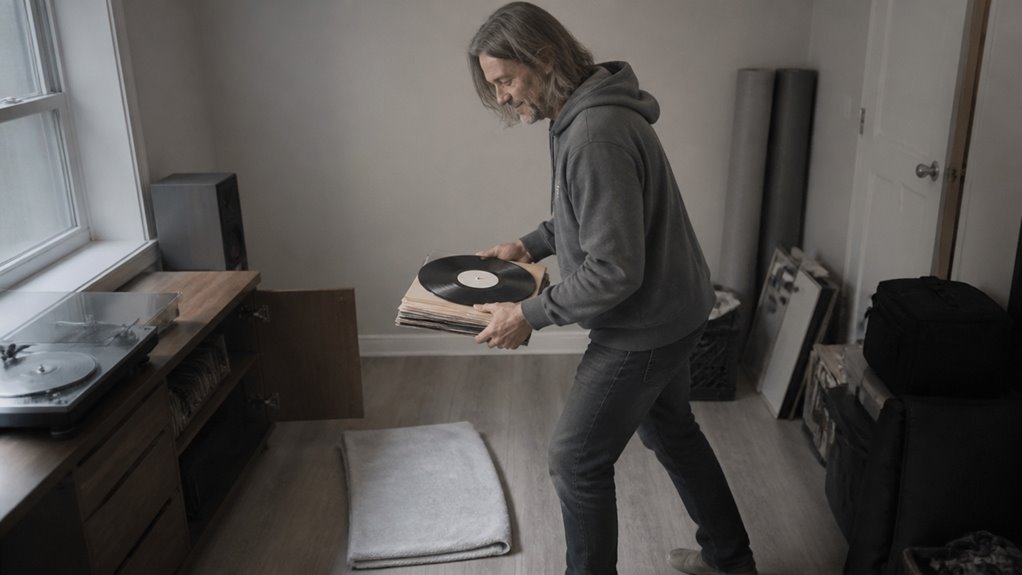
Storing vinyl records in a high-rise apartment comes down to managing weight distribution and protecting your collection from tipping, sagging, and moisture, not worrying about the concrete floor itself.

Holds hundreds of records low and wide, reducing floor load and tip risk.

Carries heavy box sets without bending sleeves or straining your back.

Keeps LPs upright, dust-free, and easy to flip through on low shelves.
See today's best deals onRecord Storage
If you are currently dealing with a wobbly shelving unit, warped bottom shelves, or records that feel damp when you pull them out, you already know the struggle.
This article covers how to lay your cabinet sideways along a wall, load heavy box sets on lower shelves, and anchor the frame to studs so everything stays secure.
Read on for the exact layout tweaks and bracing fixes that keep your records safe and your space stable.
The key mistake most collectors make is choosing a tall, narrow tower that concentrates weight unevenly, which leads to sagging over time.
Instead, spread the load horizontally and check the level of your feet twice a year to prevent silent damage.
Start with the simplest fix: turn that tall unit on its side and see how much more stable everything feels.
Air Purify Highlights
- Distribute record weight by placing cabinets along walls instead of corner columns.
- Spread storage across multiple low-profile units to reduce point load stress on slabs.
- Load heaviest box sets on bottom shelves to lower the center of gravity.
- Verify the building’s live load rating before exceeding 19 lb per square foot.
- Use load-spreading pads and even cube loading to prevent sagging and slab damage.
Calculate Your High-Rise Floor’s Load Limit for a 4×4 Vinyl Cabinet
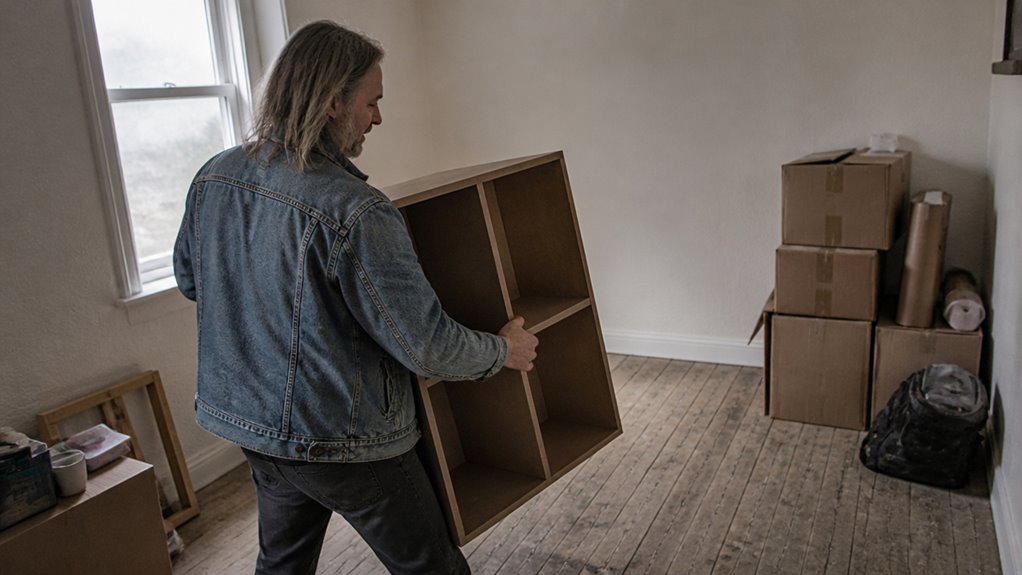
Two numbers decide if your vinyl collection can live above someone else’s ceiling: the cabinet’s total weight and your floor slab’s load rating. A loaded 4×4 Kallax with records hits roughly 200 kg, spread over 23 square feet, which works out to 13–19 lb/sq ft.
Two numbers decide if your vinyl lives above someone’s ceiling: cabinet weight and floor load rating.
That sounds heavy, but most concrete high-rise floors rate 40–60 lb/sq ft for live load, so you have plenty of headroom. Check your lease’s structural notes or ask building management, because wood-frame towers can be a different story.
Vinyl weight adds up quickly, so weigh a few box sets and 180-gram pressings with a luggage scale. Multiply that by your cube count, then add the cabinet’s own weight.
Divide that total by the footprint to get your real floor stress number. Most apartments pass easily, but avoid parking the unit in one corner column.
Spread the cabinet out along a wall or across two floor joists, and you are fine. Math first, panic never.
Use 5 Low-Profile Layouts That Spread Weight Safely Across the Slab
Low-profile layouts spread weight safely across the slab without giving up much storage. A 1×4 cube unit holding roughly 260 records keeps the load wide and low, which suits renters who want discreet, floor-hugging storage.
A 2×4 laid sideways is the sweet spot: eight cubes hold about 520 LPs, and the low center of gravity prevents tipping. You trade vertical space for a compact footprint, but capacity stays nearly the same.
Corner load avoidance keeps point stress off weak slab zones. Skip the 1×5 tower entirely, because it concentrates weight dangerously.
A 4×4 on its side distributes nearly 1,040 records evenly, though the unit is bulky. Place any unit away from walls with electrical chases.
Load each cube evenly, and your slab stays safe. Keep the layout low and wide, and the structure handles the weight without strain.
Load Bottom-Up: Heaviest Box Sets First, Lightest Records on Top
Start with the floor, not the ceiling. The floor loading order matters more than your aesthetic dreams.
Heaviest box sets, including 180‑gram gatefolds, go on the lowest shelves first. Lightest records, or even empty jackets, stay above.
This bottom up distribution keeps the unit’s center of gravity low. It reduces wobble and point‑load stress on the slab.
Tier 1 (bottom 2 cubes): Box sets, 180‑g pressings, anything over 200 g.
Tier 2 (middle): Standard LPs, mixed weight, evenly spread across all cubes.
Tier 3 (top): Paper sleeves, 7‑inches, or decorative objects under 100 g.
Follow that order, and your shelf won’t tip. Your floor won’t groan, and your back will thank you.
Load heavy down, light up, always.
Anchor, Brace, and Insulate: Renters’ Fixes for Wobble and Damp Slabs
Renters get a raw deal regarding shelving, but the fixes are cheaper than a replacement slab.
Wobble and damp are the twin enemies here, and both have cheap counters.
Start with a vapor barrier under the unit if your slab sweats. A simple plastic sheet is a $10 insurance policy against moldy sleeves.
Wall anchoring into studs stops tip-overs. Drywall anchors work, but studs are the real deal.
Furniture leveling pads fix uneven floors. Load spreading pads distribute weight so one corner doesn’t crush the slab.
Cabinet bracing adds rigidity to flimsy frames. Shelf reinforcement, a mid-span wooden strip, prevents sagging under heavy box sets.
Spend $40 on these fixes, and your collection stays put, dry, and safe.
Inspect Shelves Twice a Year to Prevent Wobble and Sagging
A shelf full of vinyl is a quiet argument with gravity, and gravity wins eventually. Twice a year, check for wobble and sagging before a 40-cm cube becomes a 20-kg floor pancake.
Loose cam fittings usually cause the sway, not the records themselves. A wobbly unit accelerates wear on both sleeves and spine.
Measure the shelf span. Anything over 30 inches needs a center support, no excuses.
Match wood species to load. Pine sags under 180-g pressings, but birch plywood holds steady.
Tighten every screw, bolt, and cam lock. A quarter-turn now saves a horror story later.
Sagging shows as a slight bow in the middle. Catch it early and shift heavy box sets down low.
The shelf stays honest until next spring. Make this check part of your cleaning routine, right after you swap the stylus and reset the anti-skate for the season.
Frequently Asked Questions
Can a 4×4 Cabinet Damage a High-Rise Concrete Slab?
A 4×4 cabinet can damage a high-rise concrete slab, but only under rare conditions. The risk comes from concentrated point loads, such as a single leg pressing into a thin or post-tensioned slab.
To stay safe, place a wide plywood or rubber mat under the cabinet to spread the weight across a larger area. This simple step reduces stress on any one spot, especially near edges or columns.
Check your building’s floor load rating if you are unsure, as older slabs vary. For turntable isolation, focus on leveling the cabinet instead of worrying about slab failure.
If you notice cracking or deflection, consult a structural engineer. In my experience, most cabinets are far lighter than the slab’s design limit, so practical precautions usually suffice.
Are Wall Anchors Required for a Low 2×4 Unit?
Wall anchors are not required for a low 2×4 unit, but they are still a smart safety choice for tall or top-heavy loads.
When the unit sits low and is fully loaded with records, its weight alone usually keeps it stable on the floor.
The key is to distribute weight evenly, so place your heaviest LPs on the bottom shelf and lighter ones higher up.
Before skipping anchors, check that the unit is level and does not rock.
If you have children or pets, or if the floor is uneven, anchoring becomes more practical and worth the small effort.
For a quick tip, use a furniture strap kit with a stud finder to secure the top edge to the wall in under ten minutes.
If you choose not to anchor, still inspect the setup monthly for any shift or tilt, especially after adding new records.
What Is the Safest Layout for a Rented High-Rise?
The safest layout for a rented high-rise is a low 2×4 unit placed on its side. This spreads the record weight broadly across the floor, which respects load limits and reduces concentrated stress.
Bolt-free setups are ideal because they avoid wall anchors where drilling is often forbidden by lease terms. Keep the unit on a solid, level surface, and place your heaviest pressings on the bottom shelf for better stability.
For a concrete tip, position the short side of the records facing the wall so spines stay visible and easy to browse. This also keeps your collection accessible without needing tall shelving that might feel unstable on carpet or hard floors.
If you are unsure what your building allows for floor loading, check with your property manager. A related term to search is “modular record storage,” which often describes the low, wide footprint you want here.
How Do I Check for Hidden Floor Deflection Before Loading?
Check for hidden floor deflection by loading the area with a known weight and measuring any sag with a straightedge and a feeler gauge, not by relying on silence or a visual sweep.
Place a heavy stack of records near the suspected spot, then measure the gap under a long straightedge before and after adding the load. This simple deflection test reveals movement you cannot see, and it costs nothing but time.
For a more precise reading, use a dial indicator or laser level to track changes in millimeters, but always compare the floor’s response to the room’s structural limits. Temporary loading is safer than committing permanent shelving, so test with weights you can remove.
If you notice any spring or bounce, consult a structural engineer before proceeding. Also, check your building’s joist direction and span, as these affect stiffness, and remember that slab response varies with age and material, so verify with a manual or professional assessment when in doubt.
Do Rubber Mats Help Distribute Point Loads From Shelving?
Rubber mats do help distribute point loads from shelving, but only in a limited way, as they primarily protect the floor surface rather than carry the weight structurally.
For serious load spreading, laminate shims are the practical choice, since they level cabinet bases and transfer pressure across a wider floor area.
The mat softens the contact point slightly, yet a heavy shelf leg can still dent vinyl tiles or wood beneath it.
In my experience, place a rigid board under each leg first, then set the mat on top for vibration damping, which works better than relying on the mat alone.
Use a thin metal or plywood plate to bridge the legs and distribute force evenly; this is a simple tip you can apply today.
Related terms like load-bearing pads may also appear in hardware listings, but check your shelf’s manual for weight limits before adjusting anything.
Rounding Up
High-rise vinyl storage isn’t magic, it’s math.
Check your slab’s rating first, most handle 40 pounds per square foot, then spread the load with a low-profile layout.
Put the heaviest boxes on the bottom, anchor everything, and use felt pads plus a dehumidifier if you rent.
Test for wobble twice yearly, and keep that 400 pound cabinet far from overloading any single spot.
Measure your floor’s capacity before you move a single crate.
Brace it all, then enjoy the tenth floor without cracks in the concrete or your wallet.

Secures tall shelves to studs, preventing tip-overs and protecting your collection.

Stops wobble on uneven floors and spreads point load away from the slab.

Adds center support to long spans, preventing sagging under heavy box sets.
Check discounted items inFurniture Accessories