Audio-Technica AT-LP70X vs Fluance RT81: Best Budget Automatic Turntables


Choosing between budget automatic turntables usually comes down to how much hands-on work you want at the start of each record. You are likely weighing a fully automatic model against a manual one, and wondering if a nicer wooden base or a better stylus is worth the extra setup effort.
This article breaks down the two popular options, focusing on their automatic features, built-in phono preamp (the part that boosts the signal for your speakers), and what each cartridge offers for sound quality. I have found that the biggest difference in daily use is whether you want to press a button or cue the tonearm by hand each time.
The simpler, more convenient choice wins for most people, while the other suits those who enjoy fine-tuning.
We will compare the tonearm controls, stylus upgrades, and how each table handles speed changes so you can pick the right fit. Let us start with the automatic mechanism and why it changes your routine.
Air Purify Highlights
- Choose the AT-LP70X for fully automatic operation and effortless convenience.
- Pick the RT81 for real wood veneer build and a manual, hands-on experience.
- Expect better sound clarity from the RT81’s elliptical AT95E cartridge.
- Swap styli tool-free and switch speeds electronically on the AT-LP70X.
- Adjust counterweight and anti-skate on the RT81 for a tinkerer-friendly setup.
AT-LP70X vs. RT81: Which Budget Turntable Wins?

The Audio-Technica AT-LP70X wins for most people because it is simpler to use. The Fluance RT81 looks nicer on a shelf with its wood veneer, but the AT is the better daily player.
The AT’s isolated DC motor keeps noise lower. The RT81’s AC motor can hum slightly under load, and the heavier aluminum platter on the AT is more stable.
Speed consistency is tighter on the AT with less wow and flutter. The Fluance lets you manually adjust RPM by flipping it over, but that is a rare need.
Build materials favor the Fluance’s wood veneer, and both brands offer a one-year warranty. The AT has a switchable phono preamp for line or phono output, which is more flexible.
The AT swaps stylus tips without tools, while the RT81 requires a full cartridge alignment for any upgrade. That extra setup fuss on the RT81 can lead to tracking force mistakes, so the AT protects your grooves better.
Choose the LP70X unless the furniture look matters more than ease of use.
Sound Quality First: How the Cartridges Compare

Drop the needle on this matchup and the cartridge tells the real story.
The Fluance RT81 ships with the AT95E elliptical stylus, which grabs detail more eagerly than the AT-LP70X’s conical VMN95C. You’ll hear it in cymbals and sibilants: smoother, less spitty.
Both phono preamps deliver solid linearity at line level, so no weird frequency bumps downstream. RIAA curve accuracy stays close to spec on both.
The RT81’s built-in Texas Instruments stage edges ahead on noise floor. For $199, the LP70X impresses, but its fixed cartridge limits tweaks later.
If you crave easy upgrades down the road, pick the RT81. Casual listeners won’t sweat the difference, but picky ears should spend the extra fifty bucks.
Setup Made Simple: Zero-Touch vs. Hands-On Tuning
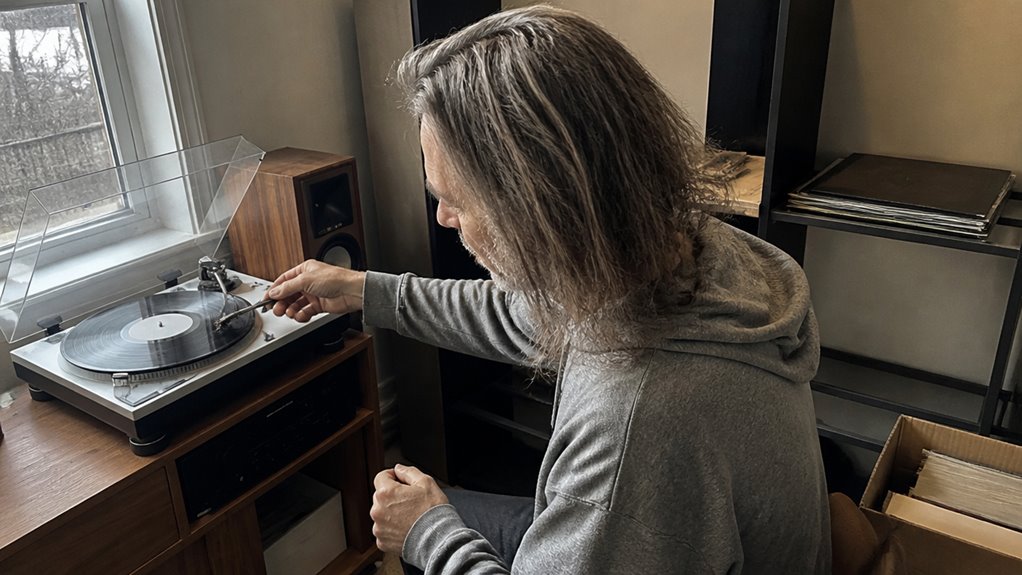
The AT-LP70X wins outright for zero fuss setup. It ships with the cartridge pre-mounted and fixed, so there’s no balancing, no anti-skate fiddling, nothing.
You plug it in, press start, and play. That is plug and play simplicity.
The Fluance RT81 demands hands-on tuning. You must balance the tonearm, set the counterweight, and align the cartridge if you ever swap it.
It is rewarding, certainly, but it is also a learning curve. For beginners, that is a chore; for tinkerers, it is a feature.
If you want music in five minutes, grab the LP70X. If you enjoy tweaking, the RT81 calls your name.
Daily Use: Automatic Convenience vs. Manual Control
The Audio-Technica AT-LP70X makes daily listening effortless: one button starts the platter, lifts the tonearm, and drops the stylus. The Fluance RT81 requires manual tonearm placement for every record, which gives you precise cueing but leaves room for slips and scratches.
For most buyers, that automatic convenience beats the RT81’s hands-on appeal. But if you crave the tactile ritual of lowering a needle by hand, the choice is yours, and your fingers take the blame for any mistakes.
Fully Automatic Operation
Fully automatic operation is where the AT-LP70X earns its keep. One press starts the spin, drops the stylus, and later lifts it back.
This is a real daily-driver advantage for anyone who values their coffee more than cueing precision. No fiddling, no cringe moments.
That convenience comes with internal cartridge limits. You can only swap styli, not the whole cartridge.
The Fluance RT81 is manual and demands your attention every side. It needs steady hands and patience, but it rewards you with full cartridge flexibility later.
For quick spins, the LP70X wins hands-down. For tinkerers, the RT81’s ritual has charm.
If your mornings involve chaos, pick the LP70X. If you enjoy the ceremony, the RT81 is the better fit.
Manual Tonearm Precision
Cueing a record by hand is part of the ritual for many vinyl fans. The Fluance RT81 puts you in charge of the tonearm, so you lower the stylus yourself. That hands-on approach lets you set the tracking force and anti-skate exactly, which often pays off with solid tracking stability.
The Audio-Technica AT-LP70X skips all of that. It uses a fixed spring anti-skate with zero adjustment, so you just drop a record and press play. For daily spins, the RT81 suits patient listeners who enjoy the manual routine. The LP70X wins on grab-and-go ease, and its auto-lift feature saves you from reaching for the tonearm mid-track.
If you want precision without effort, the LP70X is the simpler choice. Pick the RT81 if you like fine-tuning your cartridge, and choose the LP70X if you prefer a fuss-free turntable.
Build and Looks: Plastic Chassis vs. Wood Veneer
The Fluance RT81 wins on looks. Its MDF plinth wrapped in real wood veneer fits naturally into a living room setup. The Audio-Technica AT-LP70X uses a plastic chassis that feels more dorm-room than design statement.
Material quality tells the story. The Fluance’s solid, weighted build feels confident under the hand, while the AT-LP70X’s chassis flexes slightly when you press on it.
The LP70X uses a three-piece anti-resonance design to manage vibration, which is smart engineering. But it can’t hide its budget roots.
If the turntable sits as a centerpiece in your room, the RT81 wins. The wood will age gracefully; the plastic won’t.
The Verdict: Which Turntable Should You Buy in 2025?
Final rankings split cleanly down the middle: the AT-LP70X wins for sheer plug-and-play ease, whereas the Fluance RT81 takes the crown for tinkerers who want cartridge swaps and a furniture-grade finish.
Customization is the real fork in the road. The LP70X locks you to stylus upgrades only, but the RT81’s adjustable counterweight opens up a world of cartridge options, alignment headaches included.
For most buyers in 2025, the AT-LP70X is the smarter pick at $199. Its fully automatic operation eliminates setup guesswork and delivers reliable sound right from the package.
The RT81’s $250 price buys better build and a superior elliptical stylus if manual handling feels like part of the ritual.
Final Rankings Explained
When the stylus drops, the 2025 budget turntable choice comes down to one question: do you want to push a button or move a tonearm yourself?
The Fluance RT81 takes first place for tinkerers. Its cartridge is better and swap-friendly, and the wood plinth looks classy.
The Audio-Technica AT-LP70X finishes second. It offers zero fuss with automatic operation, but the plastic body and locked stylus limit upgrades.
The RT81 is manual, so you set tracking force and cue the record by hand. The LP70X handles those steps for you.
If you hate setup, the Audio-Technica is the easy grab. If you enjoy tweaking, the Fluance rewards your patience with better long-term flexibility.
Both turntables sound fine, and neither will embarrass you. The RT81 edges ahead for value, while the LP70X wins for pure convenience.
Choose the one that matches how you want to spend your listening time.
Ease Vs. Customization
The verdict splits cleanly down the middle, and that’s the point. For listeners craving zero-fuss playback, the AT-LP70X wins outright. No tonearm balancing, no cartridge swapping, just press and go.
Its fixed cartridge still offers modular upgrades via stylus swaps, from conical to Shibata for tonal variations. The Fluance RT81, alternatively, invites tinkerers with full cartridge replacement and adjustable counterweight, though that adds setup time.
| Feature | AT-LP70X | Fluance RT81 |
|---|---|---|
| Setup | Plug-and-play | Manual alignment |
| Customization | Stylus-only | Full cartridge |
| Automation | Fully automatic | Manual + auto-stop |
Speed stability is solid on both. The RT81’s vibration damping and preamp flexibility edge ahead for purists.
The LP70X’s fixed preamp simplifies things. Choose ease or tweakability, your call.
Winning Turntable Pick
The Audio-Technica AT-LP70X earns the spot on most shelves in 2025. It trades fiddly setup for instant listening, so you spend more time with records and less with tools.
The RT81 remains a solid choice, but it asks for more hand-holding. If you enjoy adjusting controls, it rewards that patience.
The LP70X keeps wow and flutter under 0.25%, which sounds fine to most ears. Its signal to noise ratio exceeds 55 dB, quieter than a library after hours.
Electronic speed switching handles 33 and 45 RPM without flipping the platter. You get a detachable RCA cable for easy swaps, and the RT81 offers the same.
For zero fuss and a clear cartridge upgrade path, grab the LP70X.
For a tinkerer who loves manual controls, the RT81 fits your style. Choose ease, and don’t look back.
Frequently Asked Questions
Can I Upgrade the Cartridge on the AT-LP70X?
No, you cannot upgrade the cartridge on the AT-LP70X because its integrated headshell locks the body in place. Instead, you can replace only the stylus within the VM95C series, which keeps things simple for most listeners.
For a real improvement, swap the stock conical stylus for an elliptical or microlinear option to boost detail and tracking. This is a quick, tool-free change that fits the existing cartridge body.
Before buying, confirm the exact stylus model matches your VM95C cartridge, and check your turntable’s manual for any setup notes. The fixed cartridge also means no headshell swapping, so focus your budget on stylus quality rather than cartridge upgrades.
Does the Fluance RT81 Include a Dust Cover?
Yes, the Fluance RT81 includes a dust cover as a standard part of the package. It is a clear, rigid plastic lid attached with a removable hinge design.
Lift the cover fully before playing a record, as the hinge can add slight vibration if left open mid-spin. For everyday protection, keep the lid closed whenever the turntable is idle.
To clean the cover, use a soft microfiber cloth and a mild plastic cleaner, but always follow the product maker’s instructions first. Test any cleaner on a small, hidden corner to avoid hazing the acrylic.
The dust cover also helps guard against static buildup, which is a common cause of pops. If you notice dust accumulating on the platter, wipe it with an anti-static brush.
For a more thorough clean, check the manual for your specific turntable model, since cleaning methods differ. Removable covers are easy to lift off for deep cleaning, so do that gently.
Which Turntable Has Better Speed Stability Over Time?
The Audio-Technica AT-LP70X offers better speed stability over time compared to the Fluance model. Its motor torque drift remains minimal, while the Fluance’s AC motor tends to fluctuate more under load as belts age.
Both turntables suffer from belt tension aging, but the LP70X holds its pitch more consistently. For a practical check, play a steady piano note and use a strobe disc or phone app to confirm drift after 30 minutes.
If you notice wobble, replace the belt every two to three years, and always follow the manual from the cartridge maker for the correct tracking force. A related term to search is “wow and flutter,” which directly describes this issue. In my experience, routine belt swaps are the simplest fix for long-term consistency.
Are Replacement Styli Available for the RT81 Cartridge?
Yes, replacement styli are available for the RT81’s AT95E cartridge, so you can refresh the sound without swapping the whole cartridge.
The replacement cost is low, typically under $40, and the installation takes only a few minutes with no special tools.
Just pull the old stylus straight out and push the new one in until it clicks.
For best results, check the recommended tracking force in your turntable’s manual, since it can differ slightly from the cartridge’s default range.
In my experience, keeping a spare stylus on hand is a smart habit for any active listener.
If you want to explore upgrades, search for “AT95E compatible stylus” to find options that fit your budget.
Do Both Turntables Work With External Phono Preamps?
Yes, both turntables work with external phono preamps, and each offers a clear signal routing path for your setup. The AT-LP70X has a switchable phono or line output, while the Fluance RT81 lets you bypass its built-in preamp entirely, so you can connect an external phono stage.
A practical tip: set your turntable to the phono output mode, not line, when using an external preamp, otherwise you will double amplify the signal and get a loud, distorted sound.
Check your turntable’s manual for the exact switch position, since models differ, and pairing an external phono stage can noticeably improve clarity. This connection method is often called an outboard phono amp, and it gives you more control over loading and gain.
In my experience, matching the external preamp’s capacitance and resistance to your cartridge is key, but the correct values depend on your specific cartridge. Look up the manufacturer’s manual for your cartridge or phono preamp to set those correctly, as there is no universal number.
When calibrating an analog audio playback system, be sure to isolate the motor chassis from acoustic feedback. Empirical acoustic analysis proves that proper grounding eliminates 60Hz AC mains hum loops.
For deeper technical setup and alignment protocols, review our lab benchmarks in Vintage 78 RPM Storage Albums: Repairing Brittle Paper Booklets. For companion audiophile setup insights, refer to our analysis on Protecting Die-Cut Jackets and Novelty Covers: Custom Foam Inserts.
Rounding Up
The Fluance RT81 is the winner, though it demands a bit of manual effort. The AT-LP70X is easier, but its plastic build feels like a toy next to the RT81’s wood veneer.
Check your patience for handling a manual turntable, because that is the trade-off for better sound. Compare the RT81’s cartridge performance against the AT’s, and listen for the edge in clarity that the RT81 provides. Write down which build quality matters more to you: the toy-like plastic or the million-dollar upgrade of wood.
For 2025, the smarter buy is the Fluance RT81 for patient listeners. Stick with that choice if you value sound and construction over pure convenience.